How It Shows Up
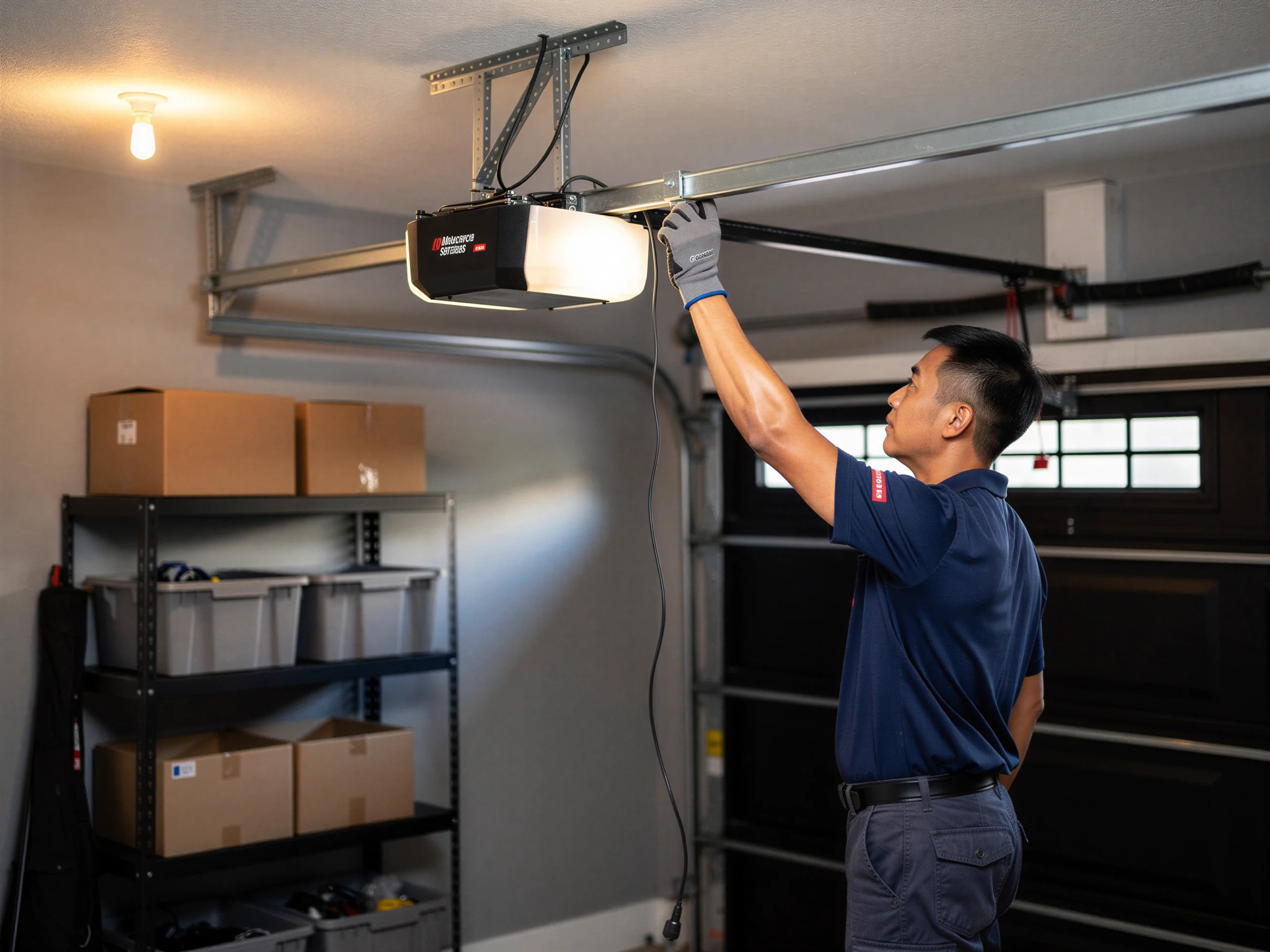
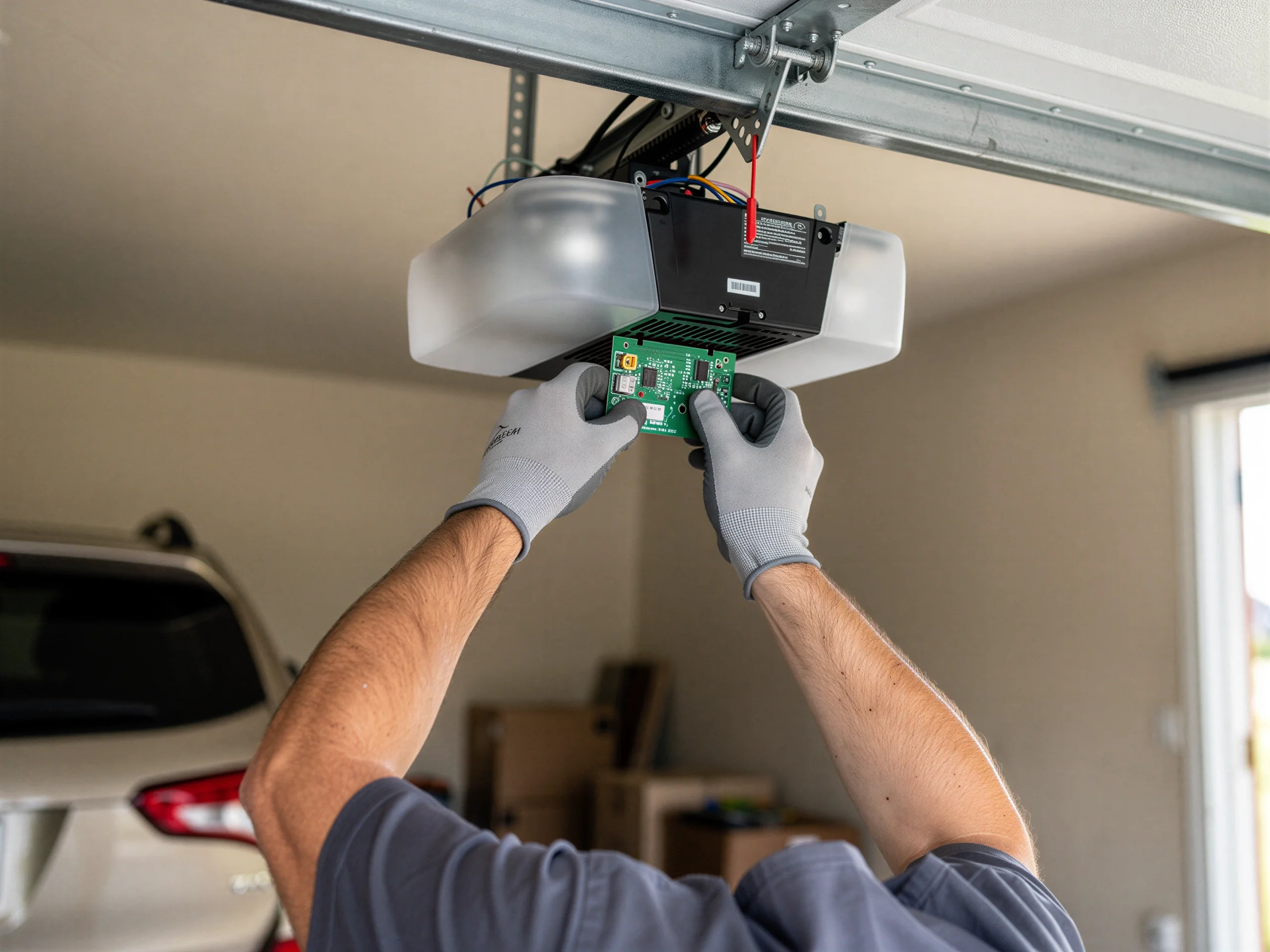
The call usually starts the same way: the door groans going up, hangs for a second at the top of the track, then drops the last few inches on its own. Or it opens fine in the morning and locks up stiff by afternoon. Most of the houses we get called to in Casa Grande went up between 1960 and 2001, with a thick band of construction in the 1980s and '90s, and that era of door hardware is now thirty-plus years into a job it was built for maybe fifteen. Springs that were wound to lift a wood door now strain against a heavier insulated replacement panel somebody swapped in a decade back. Nylon rollers that were fine for an Oregon garage have spent summer after summer in a box that regularly tops 110 degrees inside, and they've gone brittle. You hear it before you see it: a dry squeal on the way up, a clunk on the way down.
Why This Fails Locally
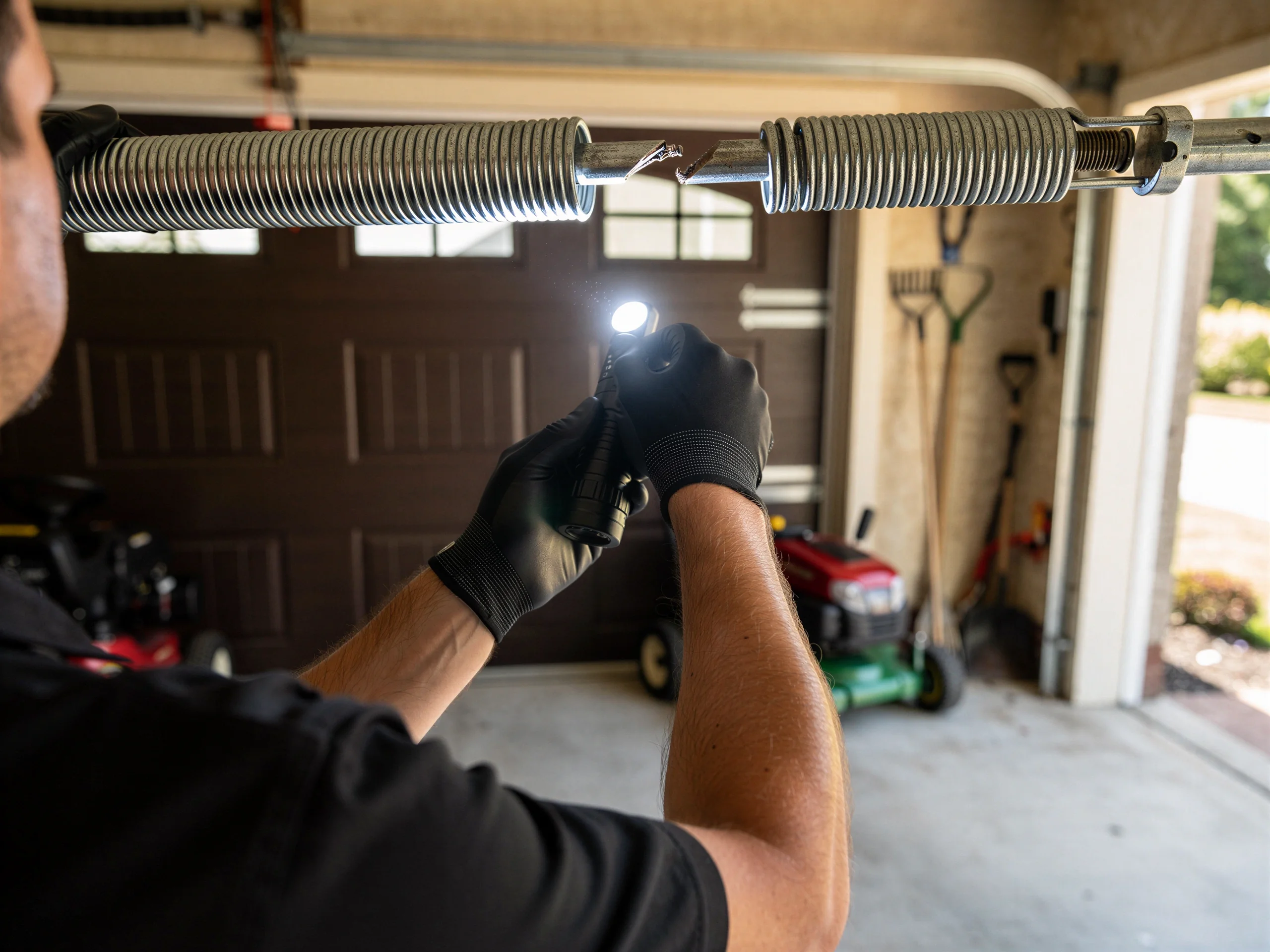
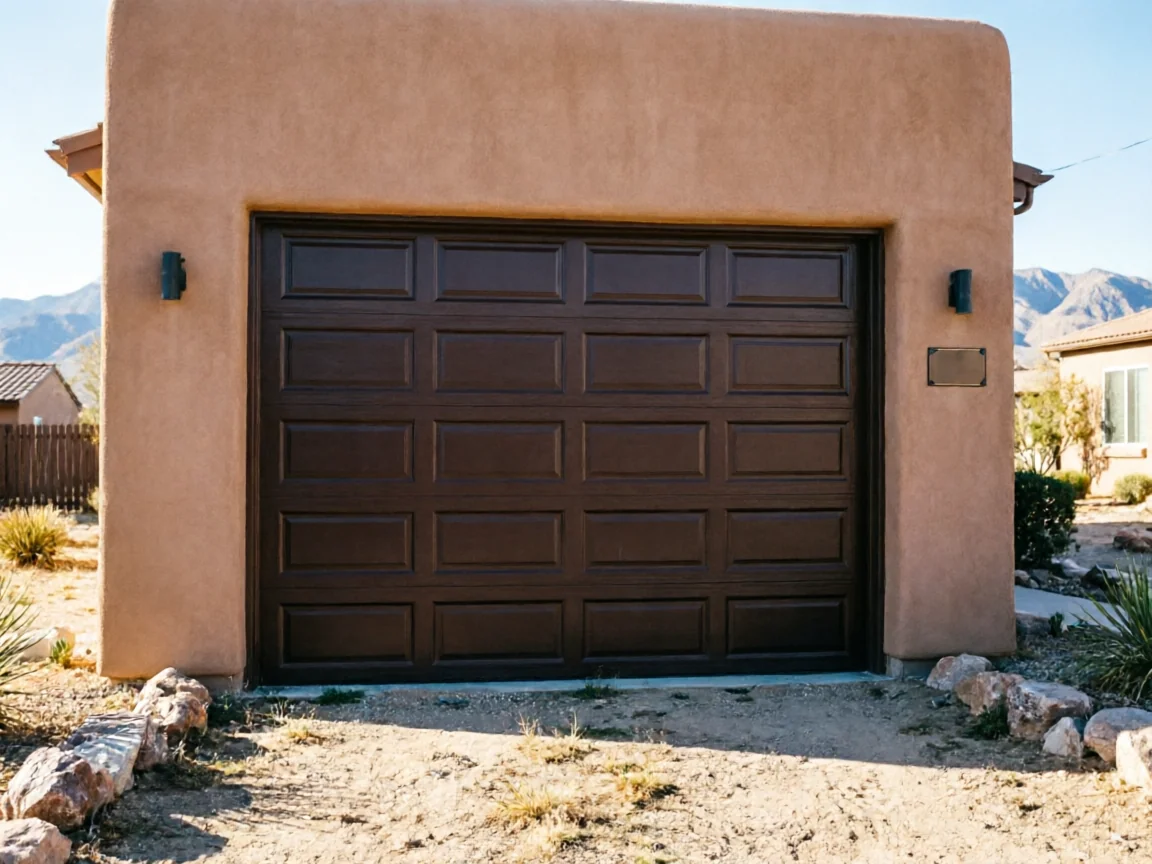
Heat is the part people underestimate. Casa Grande sits in a severe-heat band, and a garage with a south or west-facing door can run well past the outside air temperature by mid-afternoon. That heat does two things to a torsion spring: it speeds up metal fatigue in the coil, and it dries out whatever lubricant was on the shaft, so the spring binds instead of flexing smoothly. On a 1980s or '90s build, that spring has already done 30-40 years of cycles. Add a heat-soaked garage and you get stress fractures that show up as a sudden, loud bang - the spring letting go - usually on one of the first truly hot days of the year, not in the dead of winter. The same heat works on the plastic idler bearings at the end of the horizontal track and on any foam-core panel seals, which shrink and crack, letting hot air and dust into the garage instead of keeping it out. None of this is a defect in any one door. It's just what thirty years of Casa Grande summers does to parts that were never rated for it.
What the Fix Involves
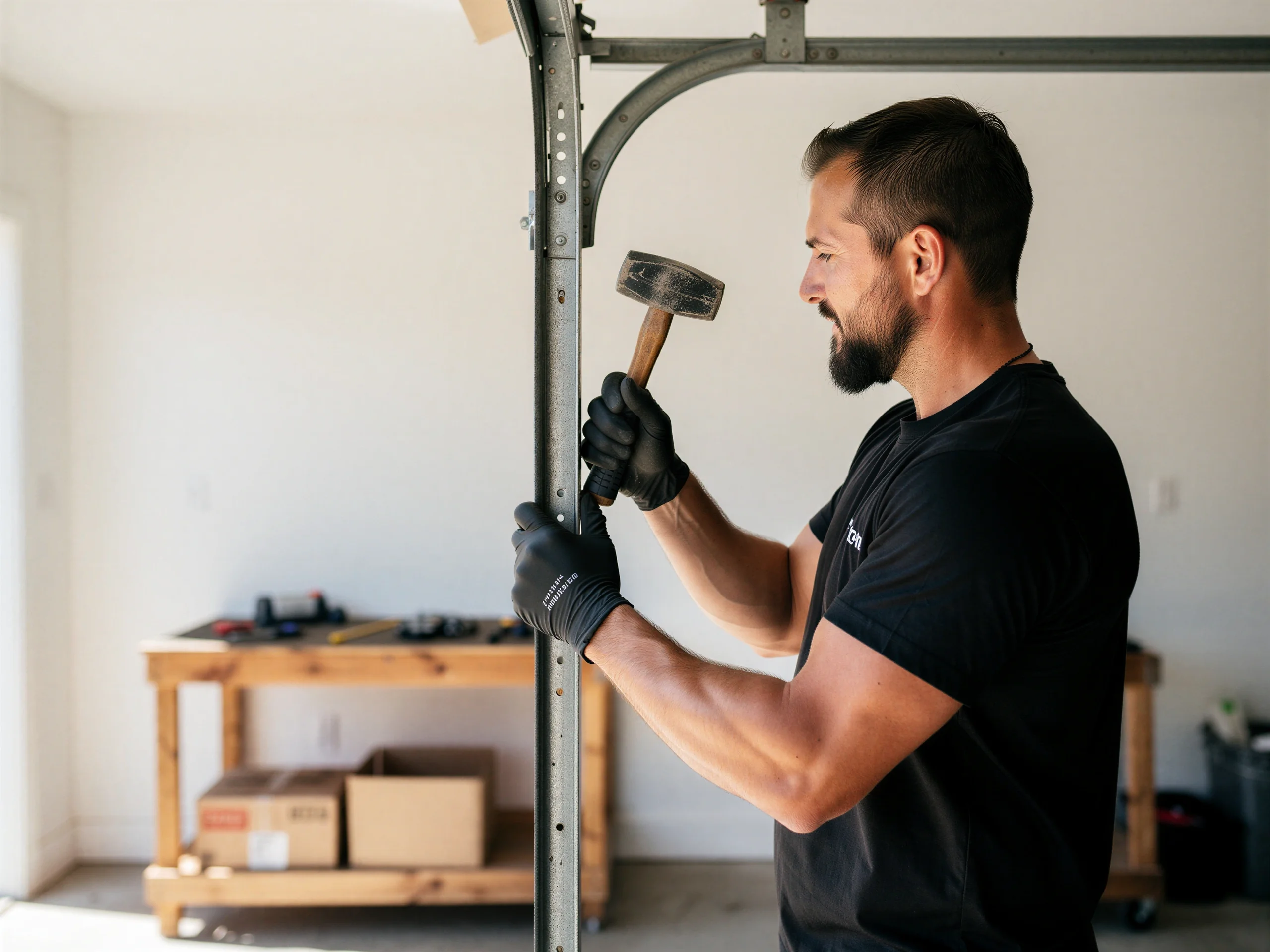
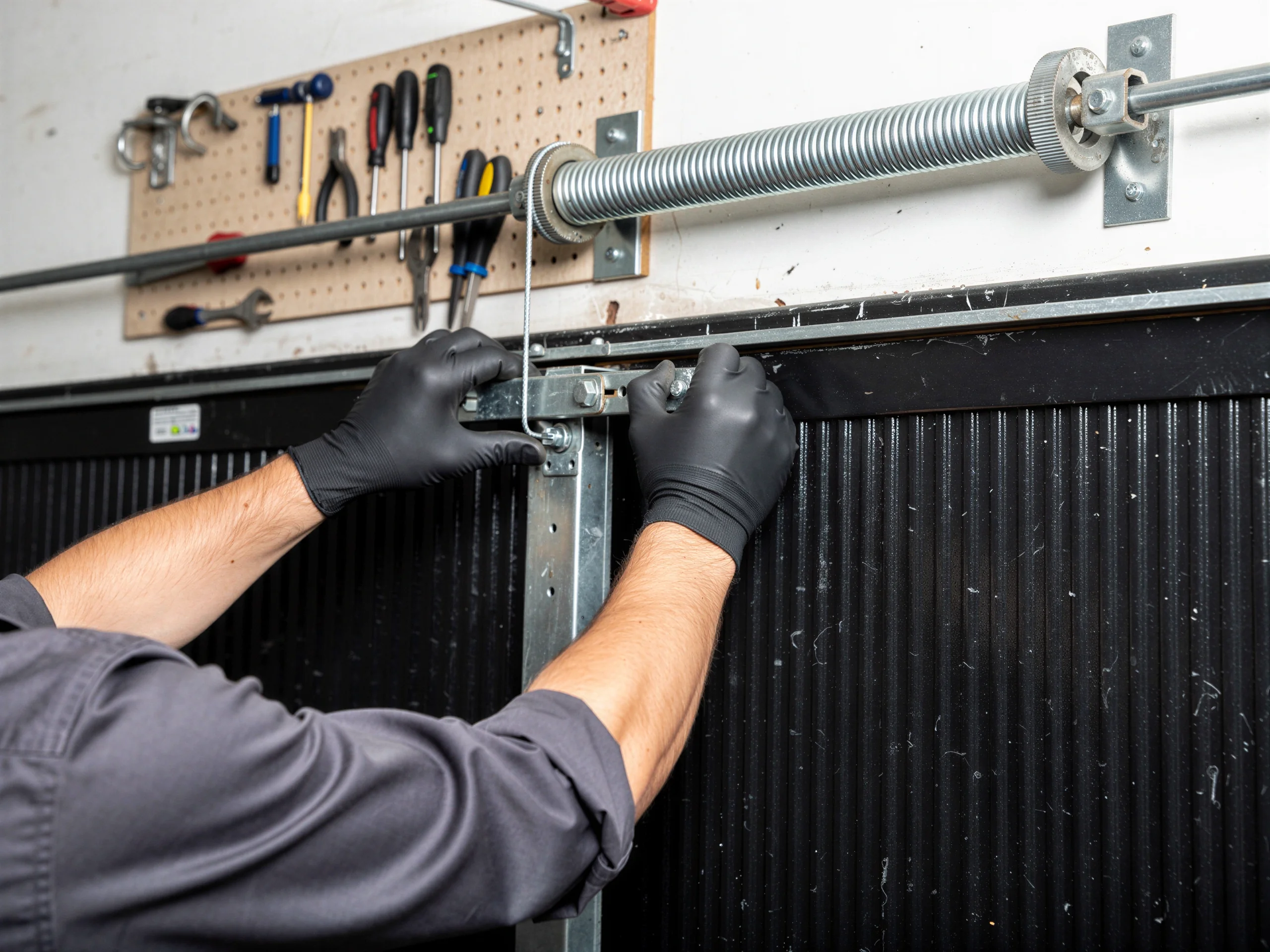
A spring job starts with matching wire gauge and wind to the door's actual weight today, not the weight it was built at, since a lot of these doors have had a panel or an opener replaced somewhere along the way without the spring being rebalanced.
Springs checked as pair
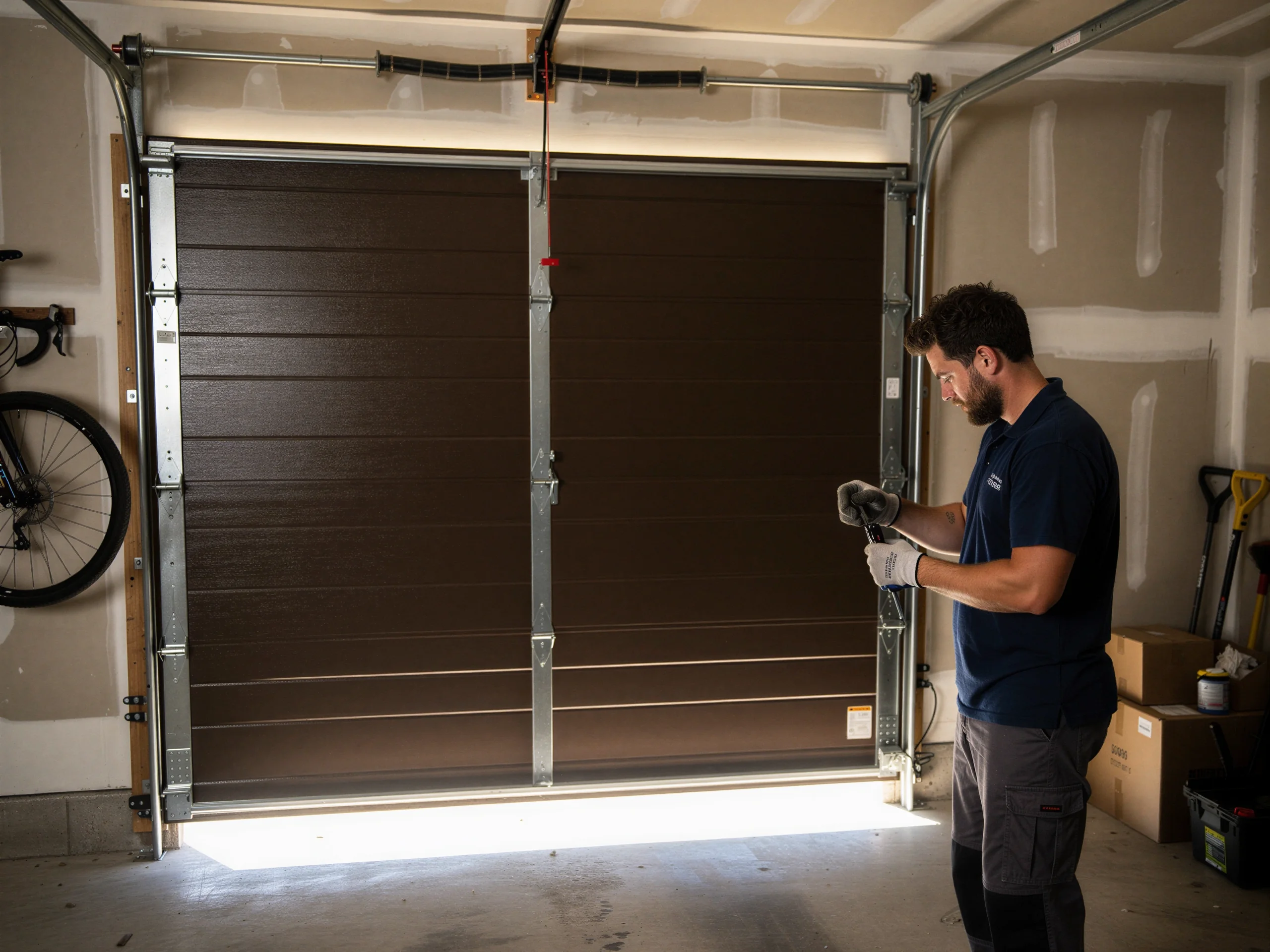
We check both torsion springs as a pair, even if only one has broken, because the other one is usually close behind it on the same age and heat exposure.
Sealed-bearing roller upgrade
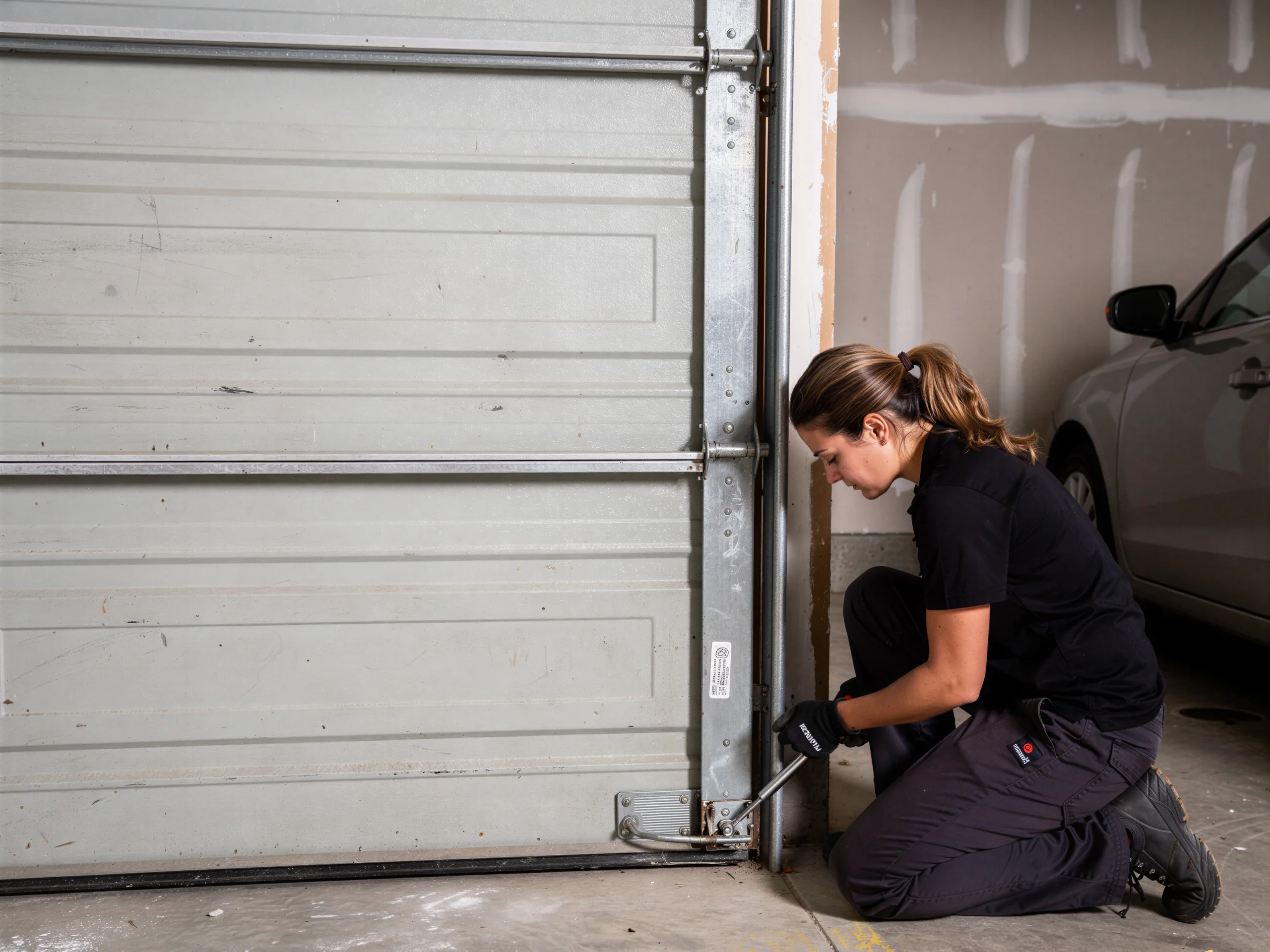
Rollers get swapped to a sealed-bearing type that holds up better in a hot box than the stock nylon ones. Track gets re-leveled, since years of a door riding slightly off-square wears one side of the roller groove faster than the other.
Warped door needs replacement
One honest limitation: if the door itself has warped from years of heat against a non-insulated panel, no amount of spring and roller work fixes that - at that point you're looking at a new door, not a repair, and we'll tell you that straight instead of billing you for parts that won't solve it.
What You Pay
What a job runs depends on whether it's a single spring, a matched pair, roller replacement, or a full track re-level, and we price that on the actual door in front of us rather than a phone estimate - a 16-foot double door with two worn-out torsion springs is a different job than a single 9-foot door with one bad roller. Casa Grande's median household income sits around $54,519, and most jobs we see fall where a repair makes more sense than a full door replacement, especially on houses in that 1980s-90s build range where the frame and track are still sound even after the spring's given out. We also work with homeowners out toward Stanfield, Arizona City, and Coolidge, where the same heat and the same era of housing stock mean the same failures, just a few more miles of driving for us.
Talk to a local pro
Garage door service in Casa Grande?
Same-day service with honest, upfront quotes.