How It Shows Up
The call usually starts the same way: the opener hums but the door won't move, or it moves a few inches and stops. Sometimes it's a remote that used to work and now doesn't, or a wall button that clicks with no response at all.
Motor runs, carriage idle
On newer installs you'll hear the motor cycle on and off without the carriage ever engaging the chain or belt. In a service area where most houses were built between 1960 and 2001 (median year 1998), the openers themselves have had a long time to wear out.
Capacitors and gears fail
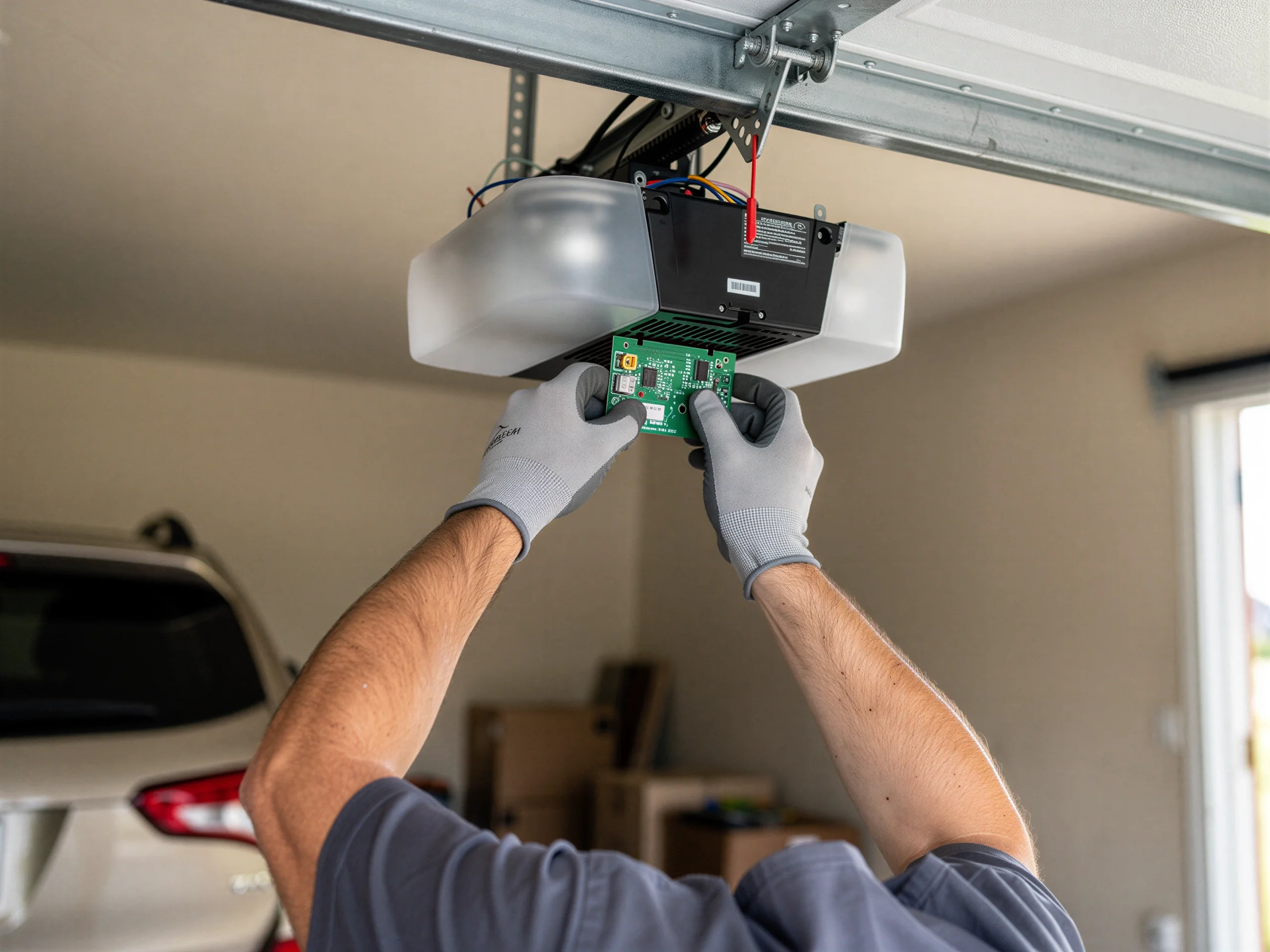
A unit installed when a house in one of the area's 1980s-90s subdivisions was new is well past the end of its working life by now. Capacitors dry out, drive gears strip, and circuit boards that were fine for twenty years start failing in the heat of a single bad July.
Mismatched opener on old framing
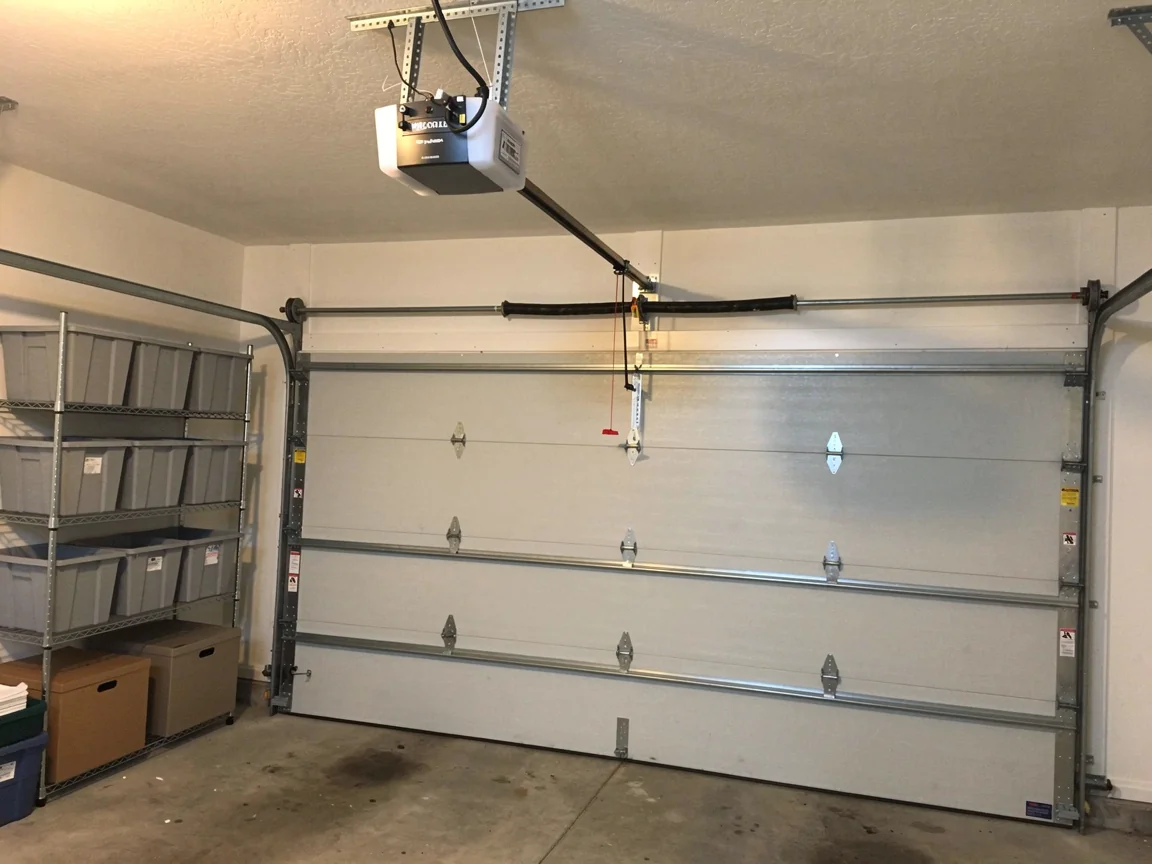
On older sections of housing stock closer to 1960s construction, the issue is often mismatch rather than failure: a newer opener bolted onto header framing and track hardware that was never sized for it. That shows up as grinding, a door that opens unevenly, or an opener that trips its own safety sensor for no clear reason.
Why This Fails Locally
This area sits in a severe heat climate band, and that matters more for openers than most homeowners expect. The motor housing, the circuit board, and the drive belt or chain all live in a garage that can sit well above outdoor temperature for hours at a time in summer. Plastic gearing softens, lubricant thins out and runs off bearings faster than it would in a mild climate, and logic boards that are rated for a normal range get pushed past it season after season.
Because the housing stock across the five main residential areas clusters in the 1980s and 90s, a large share of openers in this market are originals or first replacements, meaning they were sized to door weights and track geometry common to that era. A straight swap of an old chain-drive unit for whatever belt-drive opener is on sale doesn't always account for the header clearance or door weight those older frames were built around.
The combination is specific to here: heat that shortens component life faster than it would elsewhere, paired with a housing stock old enough that a lot of units are overdue, and sized for doors that may not match a generic off-the-shelf opener.
What the Fix Involves
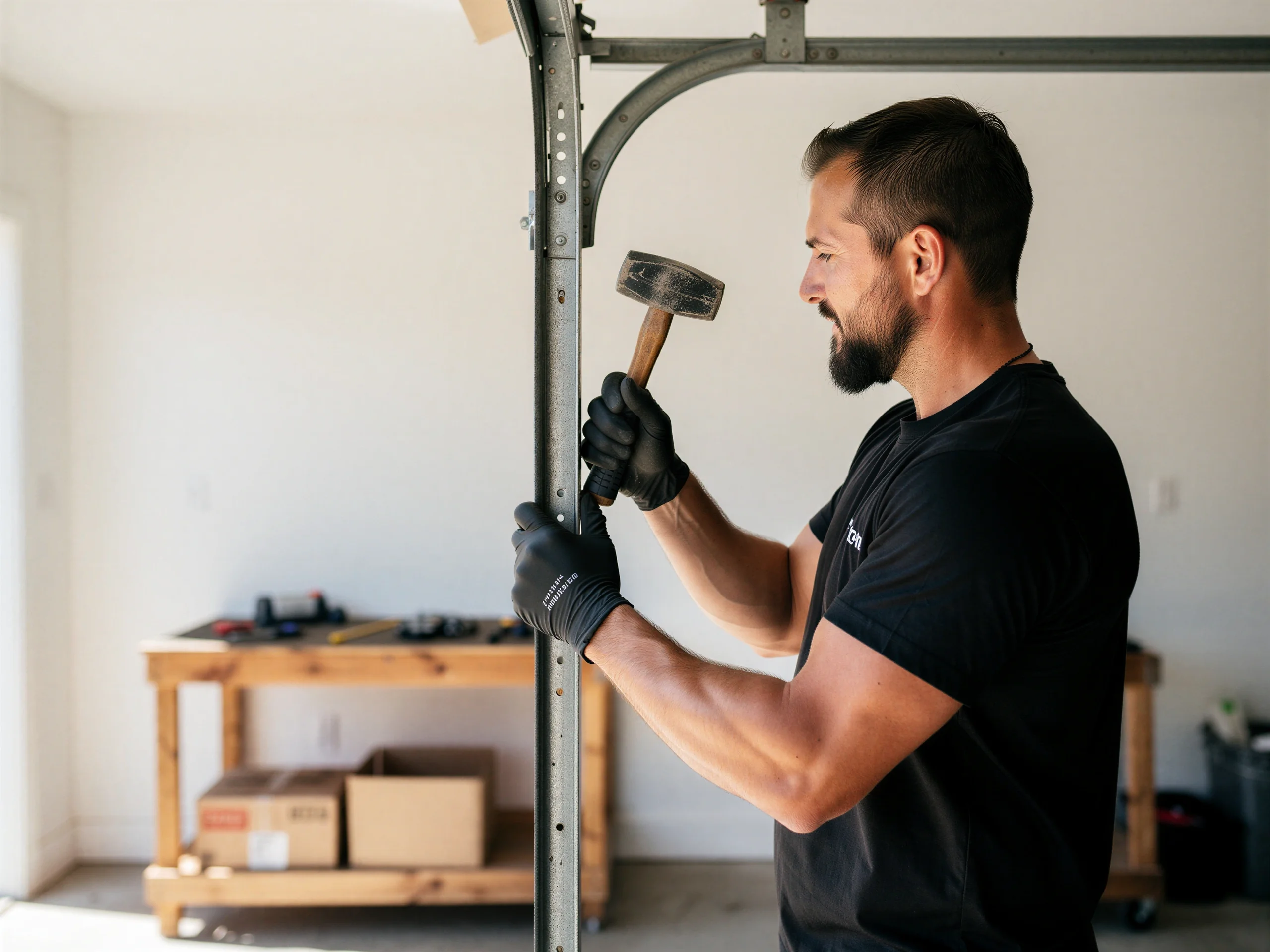
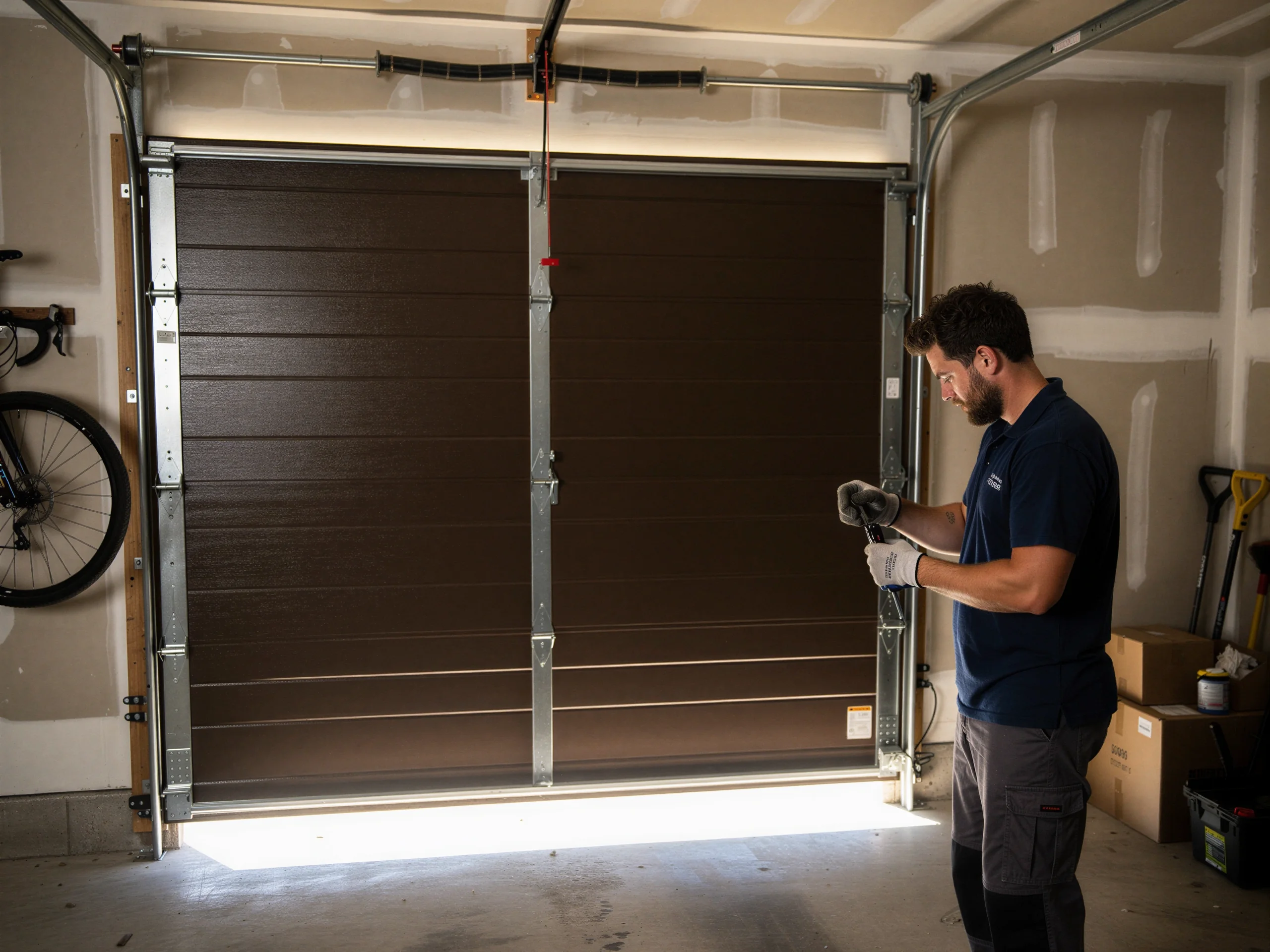
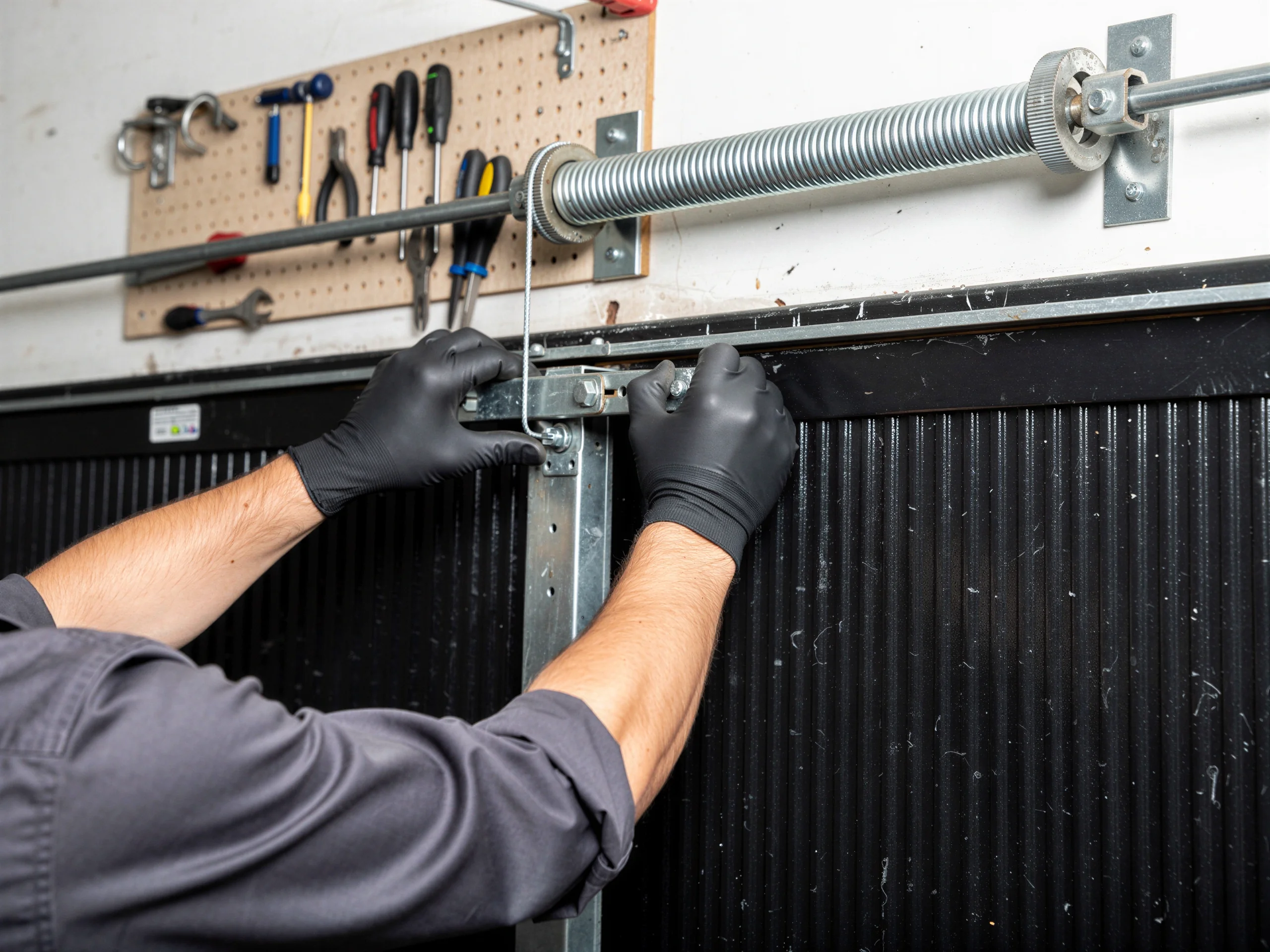
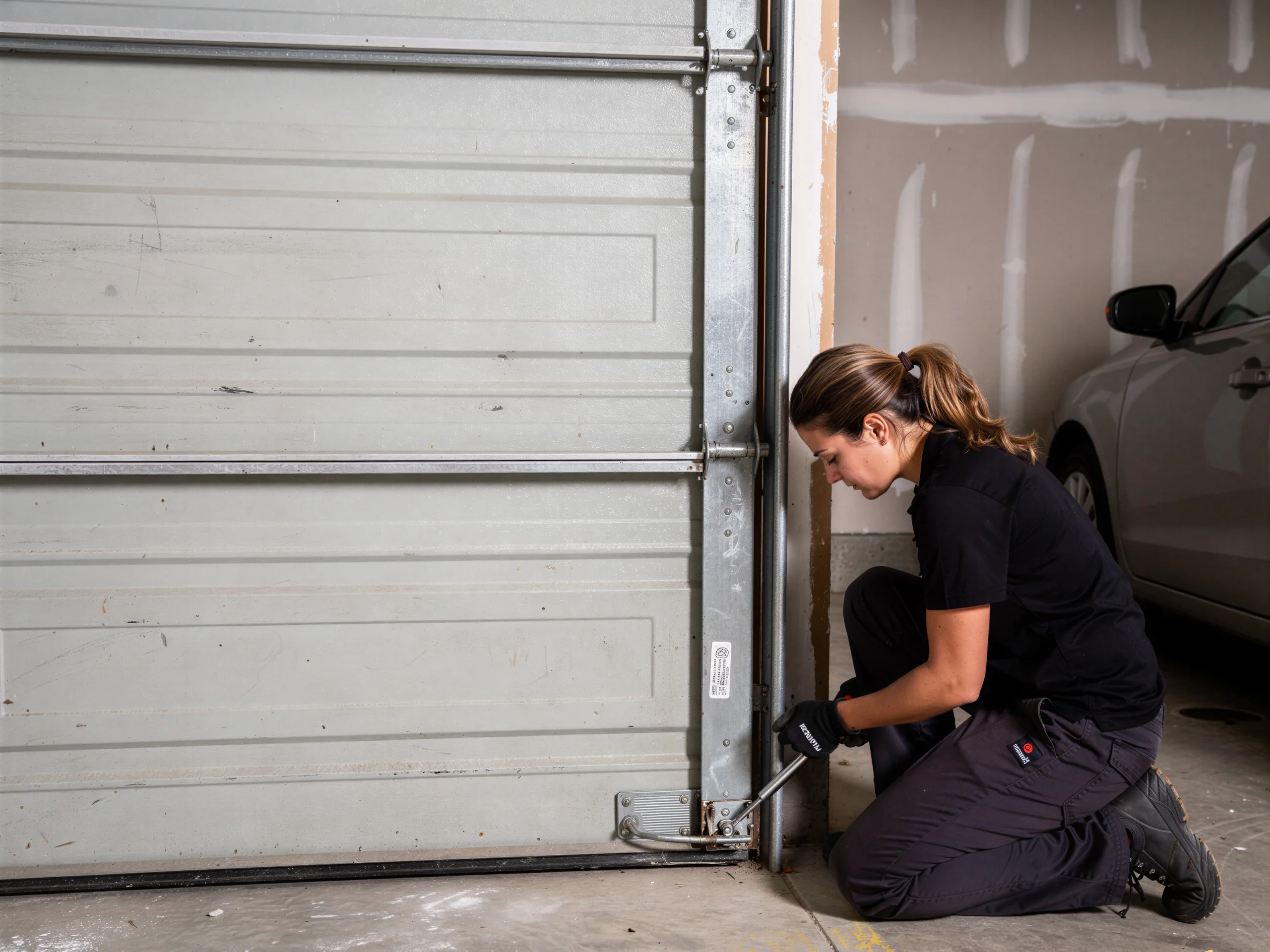
A proper opener installation starts with the door itself, not the motor. We check spring balance, track alignment, and door weight before recommending horsepower or drive type, because an opener fighting an unbalanced door burns out early no matter how good it is - and that's especially true given the heat load this area's garages carry.
Matching drive type and sensors
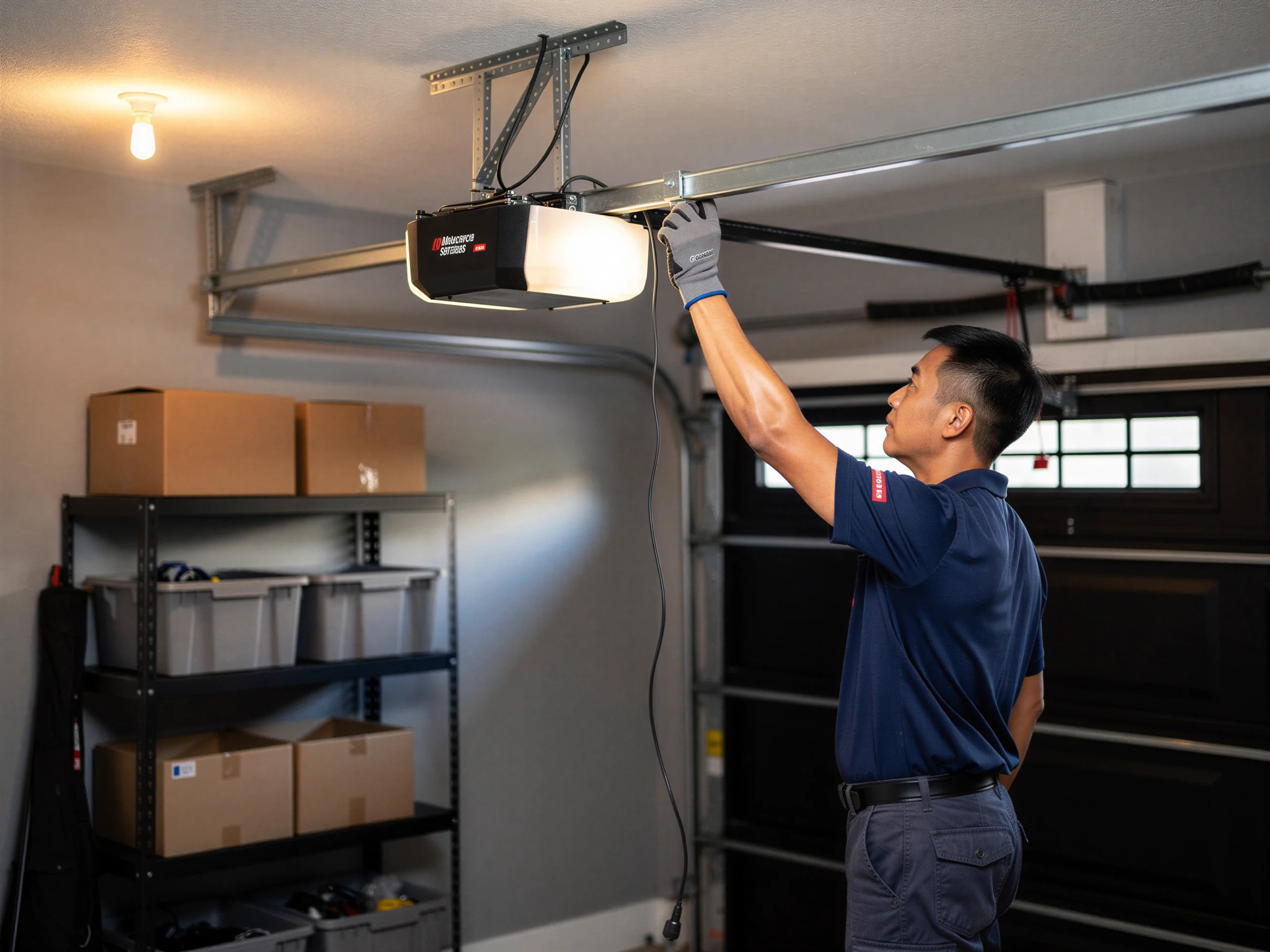
For most single-family installs we're looking at a belt-drive or chain-drive unit matched to the door's weight class, with safety sensors mounted low enough to clear typical driveway slopes, and a wall control wired rather than relying only on a remote.
Hand-set travel limits
We set the travel limits and force settings by hand rather than trusting factory defaults, since a door that's slightly out of square will trip a default-set sensor constantly.
Fix door before opener
One limitation worth saying plainly: if the door itself is warped, badly rusted, or the tracks are bent beyond simple adjustment, putting a new opener on it is a waste of money. We'll tell you that up front instead of installing on top of a problem that will just come back.
What You Pay
Cost on an opener install depends on three things: the unit itself, whether existing wiring and wall controls are reusable, and whether the door needs track or hardware work done at the same time to carry the new motor properly.
No flat opener price
We don't have a flat number to quote here because those three variables move a lot from one house to the next, even within the same subdivision. What we can tell you is that we price the job after looking at the door, not over the phone from a guess.
Separate roller and spring cost
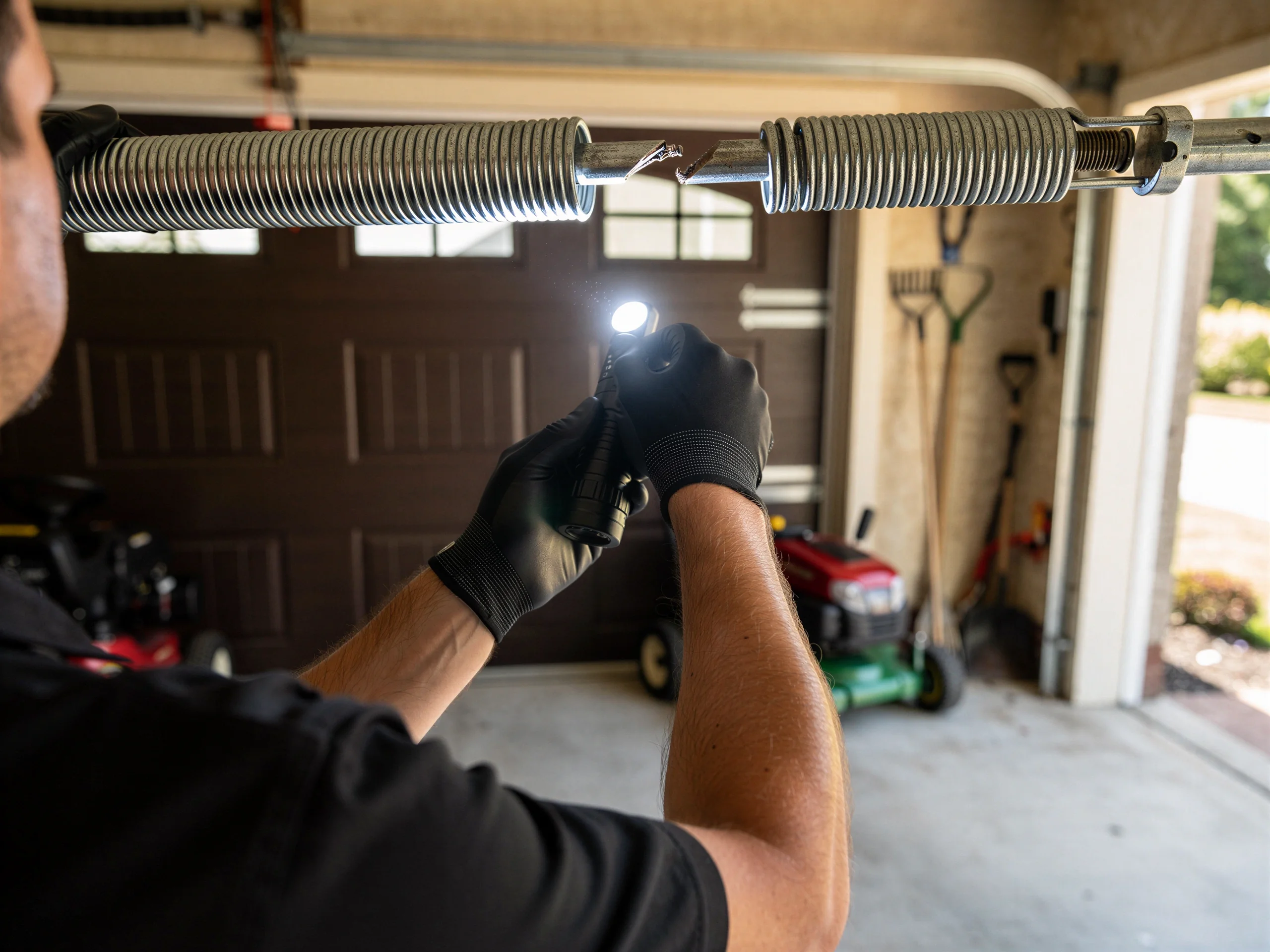
If your opener failure turns out to be a symptom of worn rollers or a tired spring, we'll show you that cost separately rather than folding it into the opener price where it's easy to miss.
Same process across towns
For homes anywhere in this market - including out toward Stanfield, Sacaton, Arizona City, Coolidge, or Eloy - the visit and the quote work the same way: we look, we tell you what's actually wrong, and you decide what to do with that information.
Talk to a local pro
Garage door service in Casa Grande?
Same-day service with honest, upfront quotes.