Why This Fails Locally
Most of the roughly 3,666 households in Arizona City are in houses built around 2001, a few years newer than the 1998 median for the wider service area. That sounds like good news, but it means a huge share of these doors are still running the exact torsion spring, drum, and opener that went in at construction. Nobody has touched that hardware in over two decades. A torsion spring is rated for a set number of open-close cycles, and most residential springs hit that ceiling well before year twenty, especially when the garage sees two or three openings a day for a family.
Add the climate band this area sits in - rated severe for heat - and the aging shows up faster than it would somewhere milder. Heat dries out the factory grease on rollers and the spring coil itself, which is why a door that opened fine in March starts grinding, hesitating, or dropping unevenly by July. The opener's circuit board and belt take the same beating from heat cycling in an uninsulated garage. None of this is a defect specific to one house - it's just what happens to original-build hardware after enough summers in this part of the state.
What the Fix Involves
Most calls out here land on one of three jobs: a broken or stretched torsion spring, a worn opener drive system, or a cable that's jumped the drum.
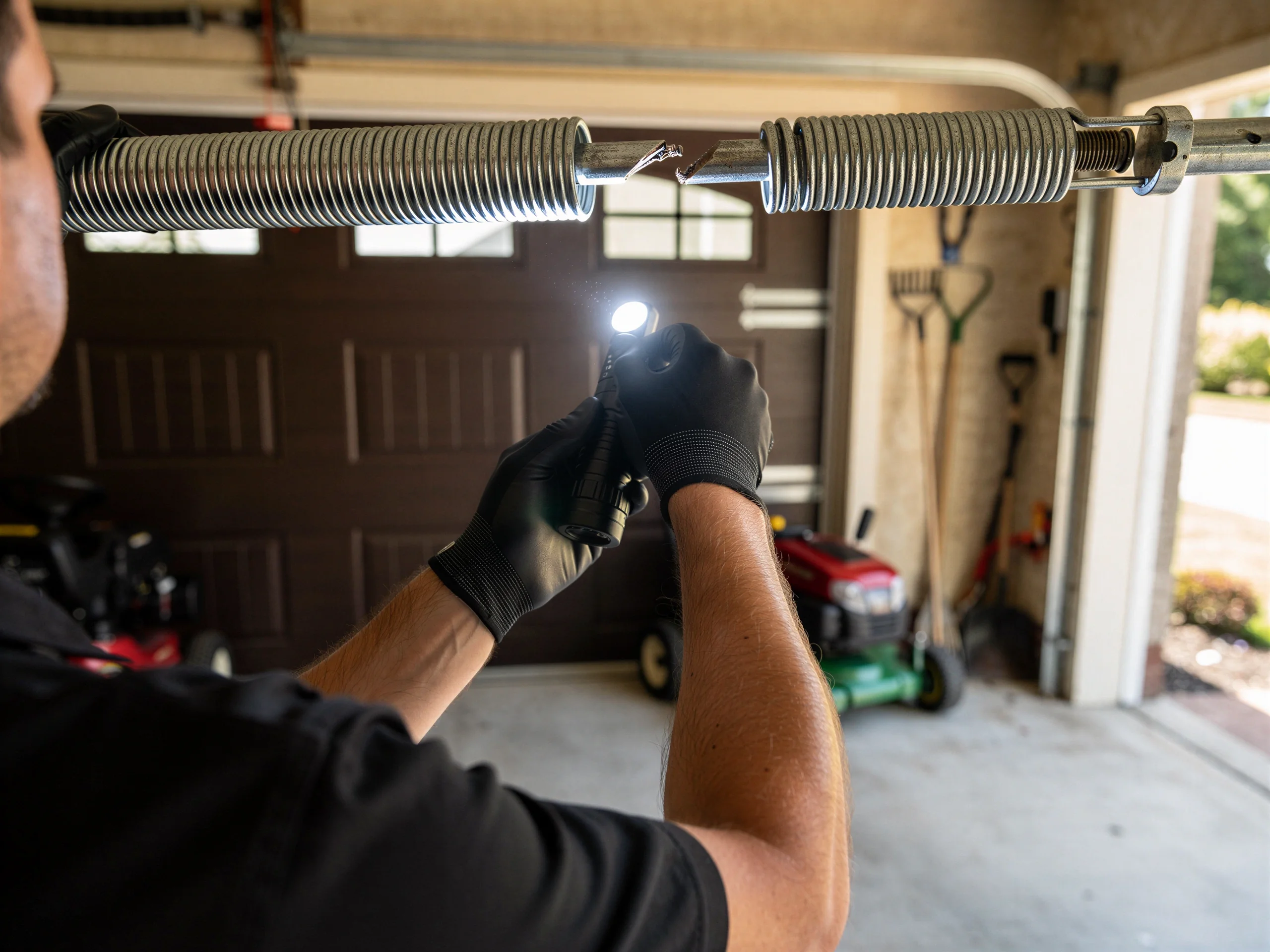
Replace both springs
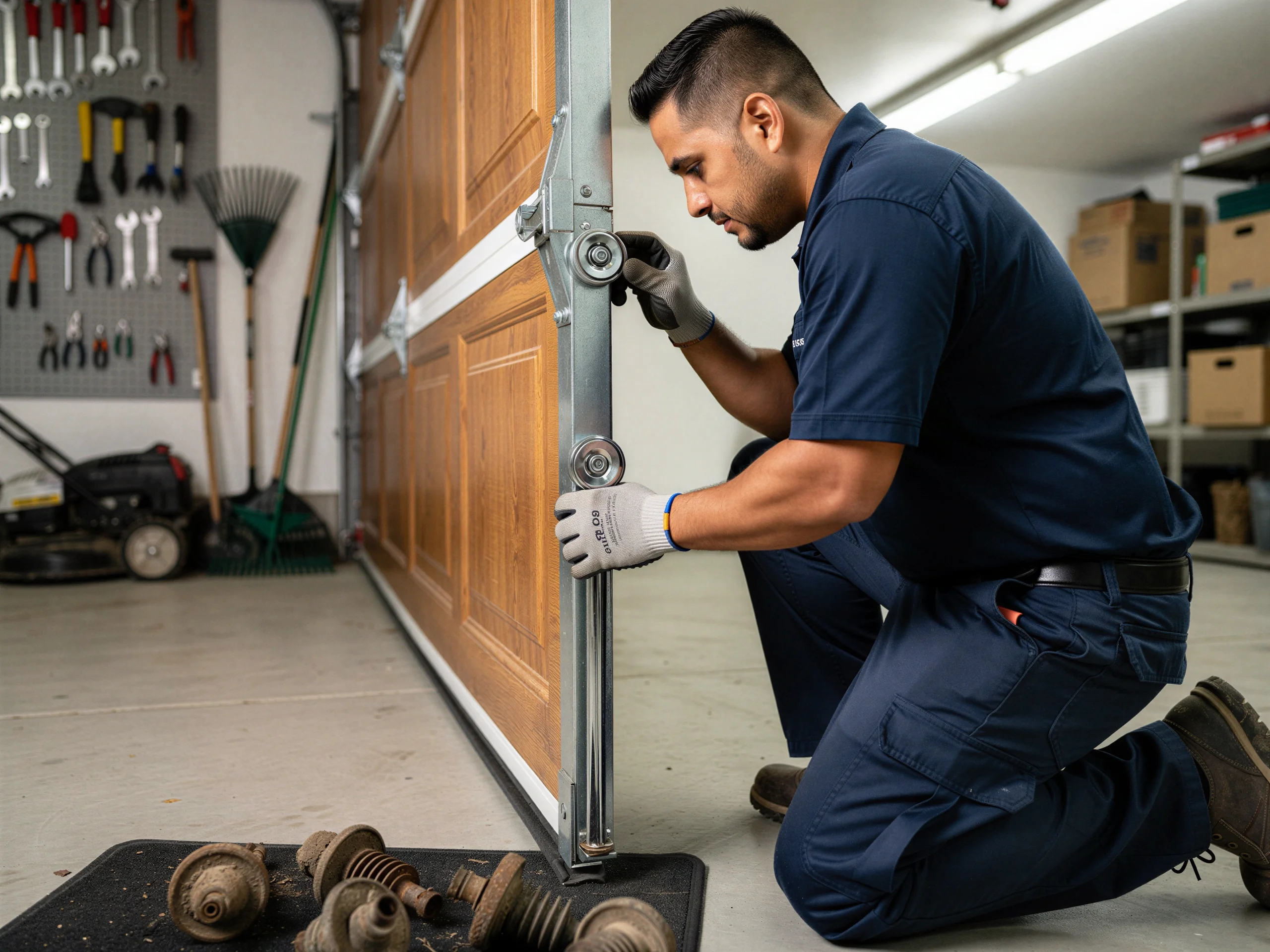
If the spring is original to a 2001 build, we're not matching it to some discontinued part - we size new springs to the door's weight and cycle count and replace both springs on a double door even if only one broke, since the other is the same age and close behind it.
Heat-rated grease service
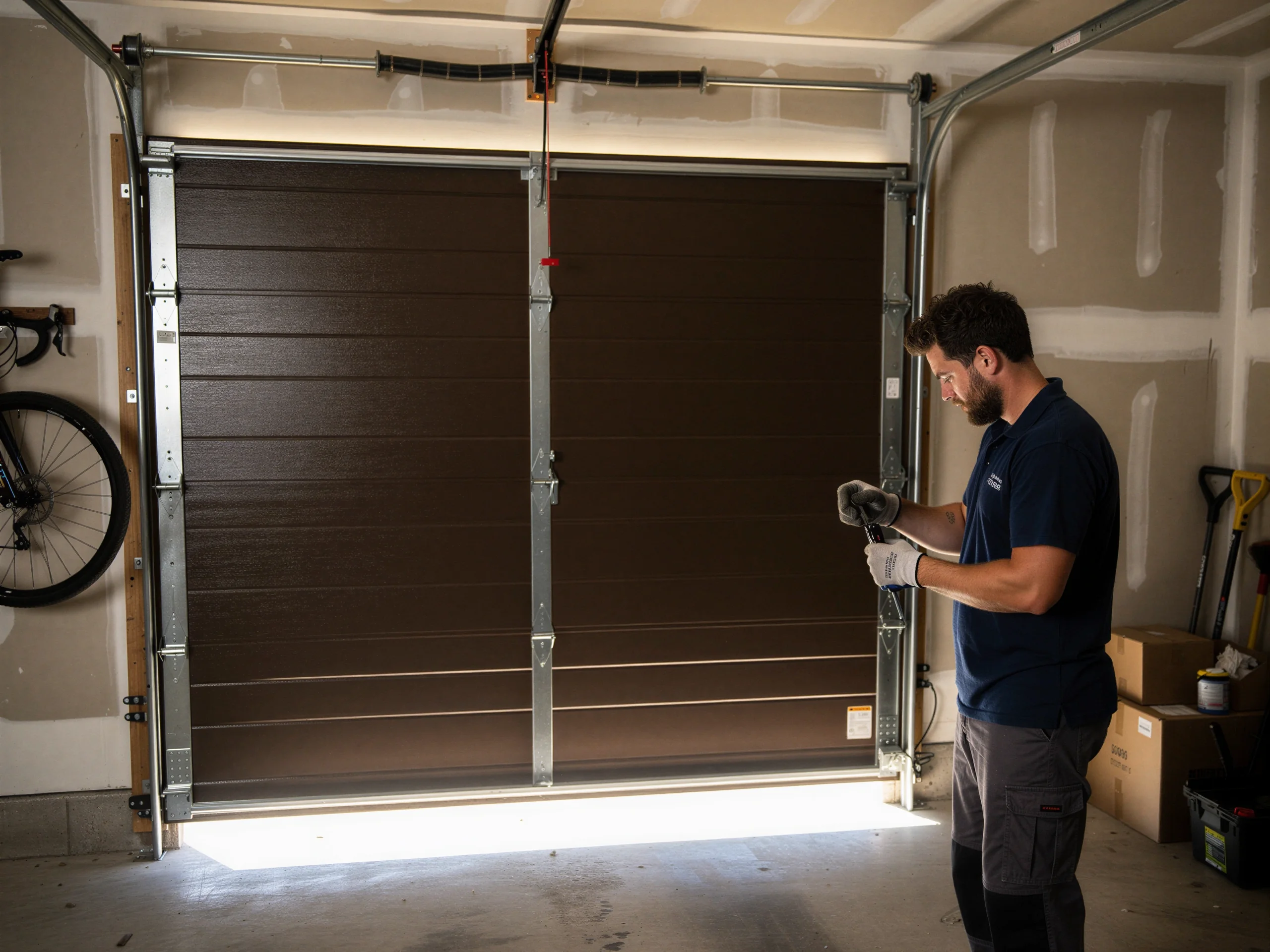
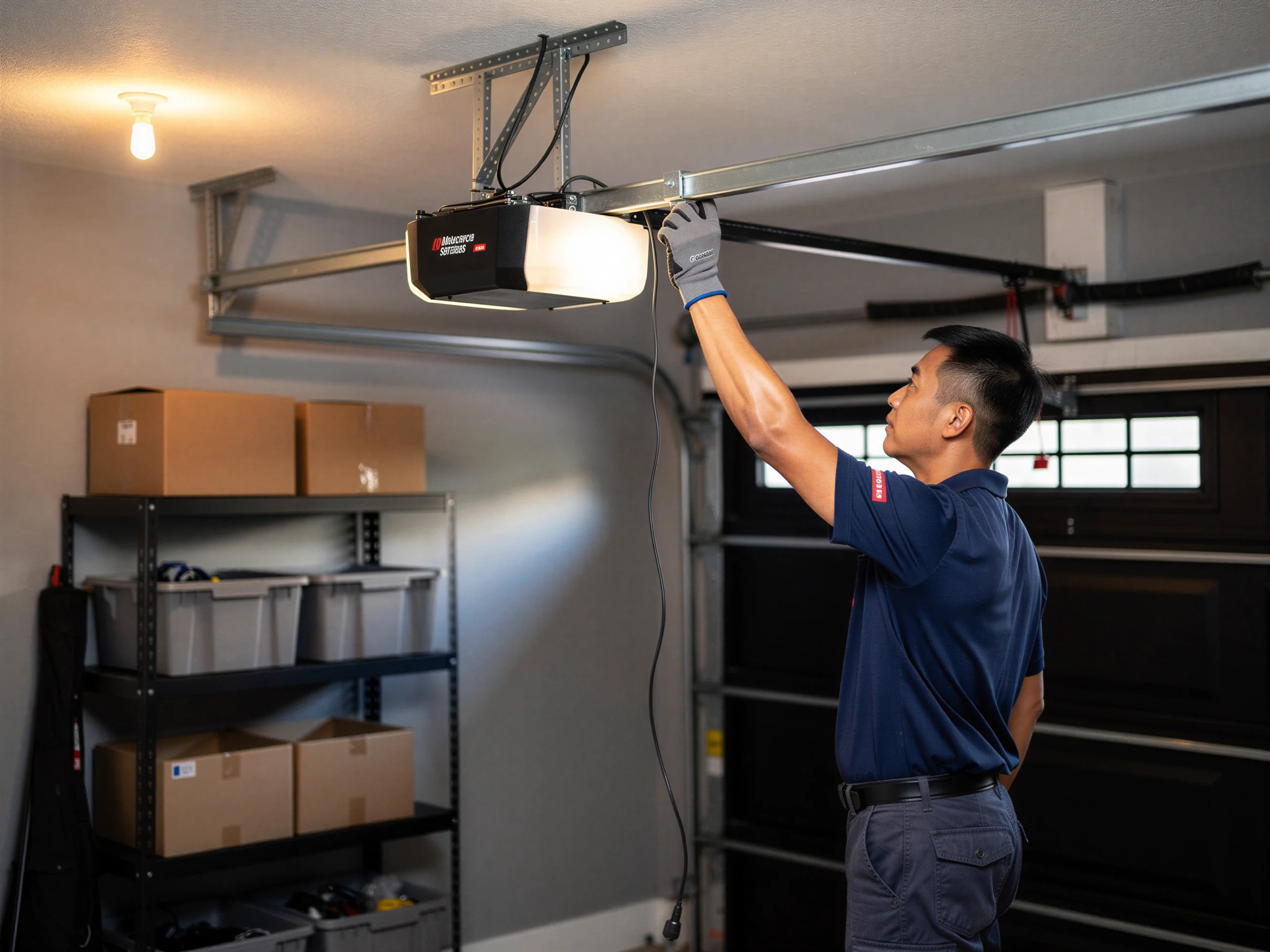
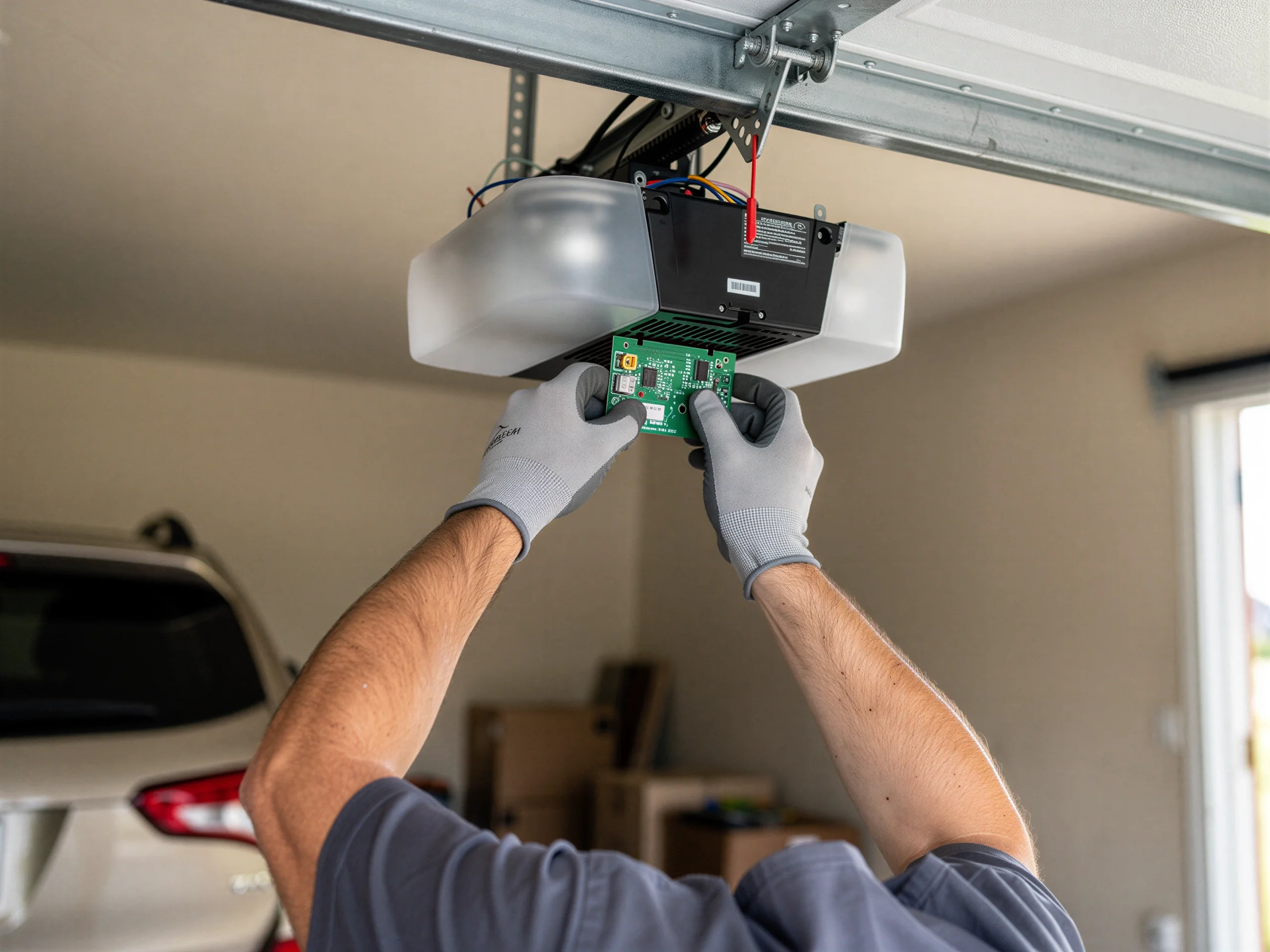
On openers, we check the gear, the belt or chain, and the circuit board before replacing the whole unit. Heat-damaged lubricant on rollers and hinges gets cleaned and replaced with a grease rated for high ambient temperatures rather than the standard white lithium grease that breaks down faster out here.
Heat-walked track alignment
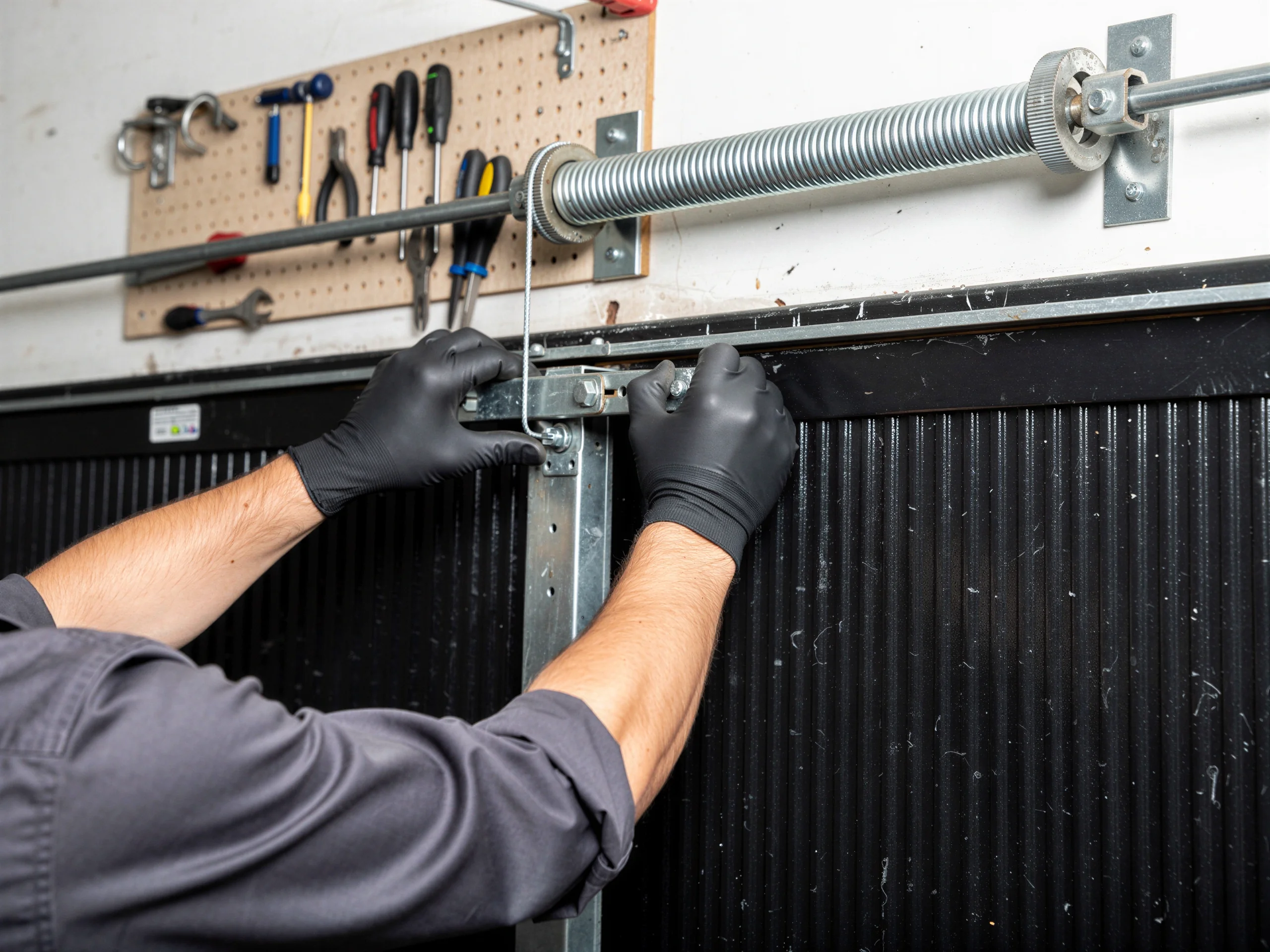
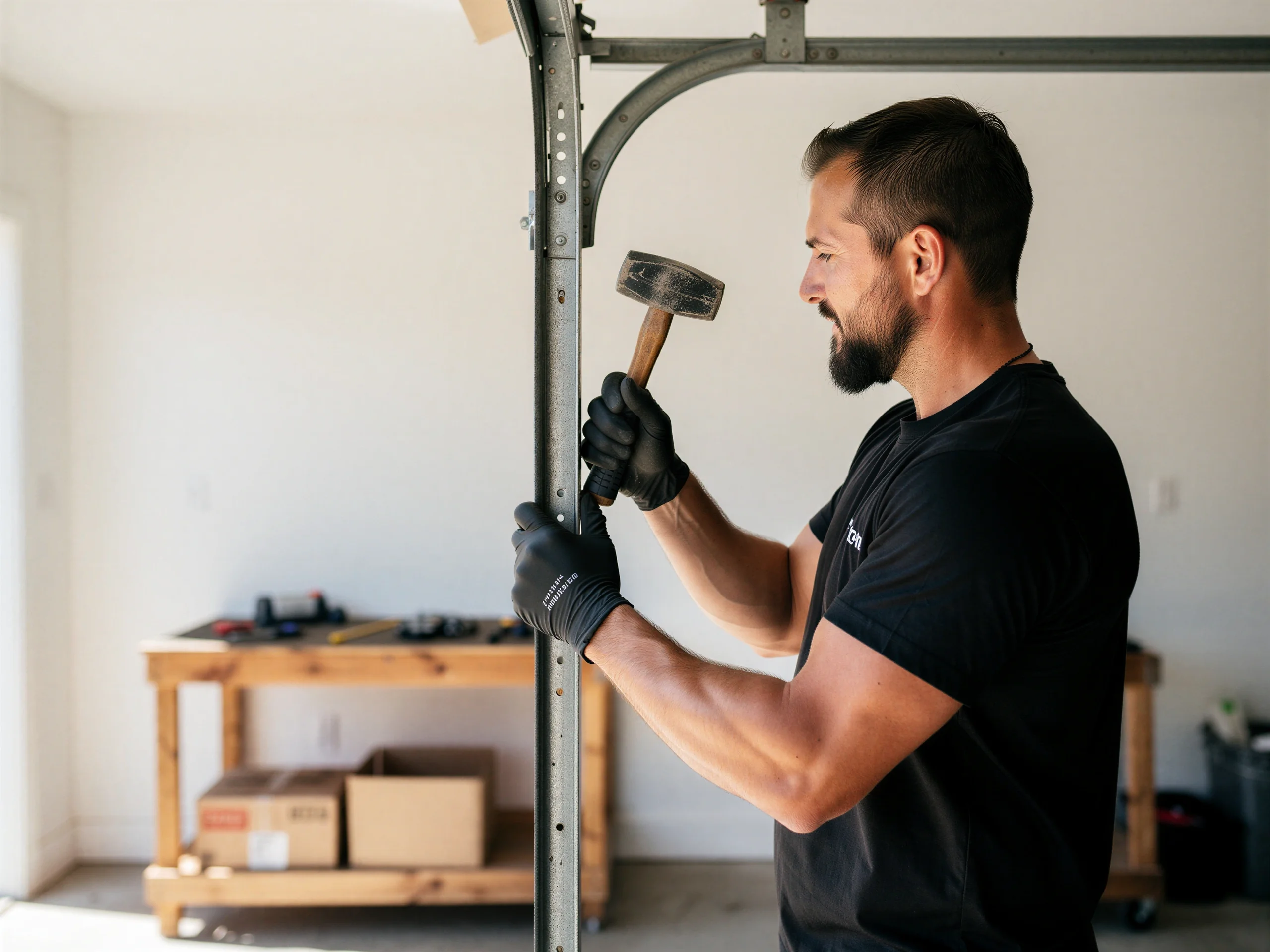
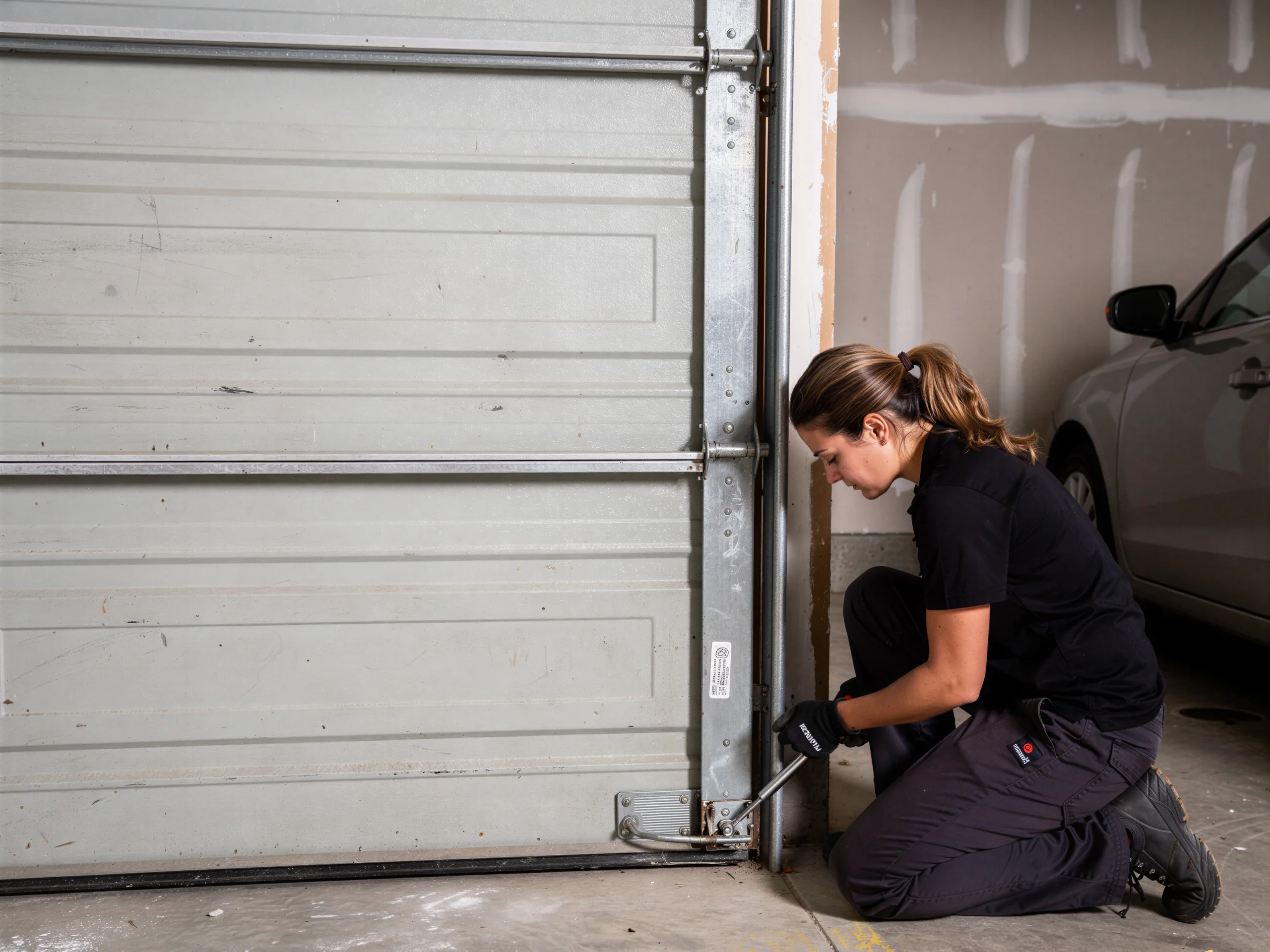
Track alignment gets checked too - expansion and contraction from heat cycling can walk a track out of plumb over twenty years, even if nothing ever looked obviously bent.
What You Pay
We don't quote spring or opener repairs over the phone, because the right fix depends on door weight, spring size, and how far the hardware has drifted out of spec - things we can't see from a description. What we can tell you is that original hardware from a 2001 build usually needs full spring replacement rather than a patch, since by this point the coil has already lost tension even if it hasn't snapped yet. If your opener is also original, we'll tell you straight whether it's worth repairing or whether the board and motor are far enough gone that replacement makes more sense than chasing parts for a twenty-plus-year-old unit.
Getting It Booked In
We run out of Casa Grande, about 12 miles from Arizona City, so we schedule the trip rather than promising a same-day arrival.
Reporting door behavior
Tell us what the door is doing - won't open, opens then reverses, one side drops faster than the other - and we'll bring the spring sizes and opener parts that cover what a 2001-era Arizona City door is likely running.
Avoiding second trips
That cuts down on a second trip for a part we didn't expect to need. See more on how we cover this area at /near/arizona-city/, and if the job turns out to be bigger than a repair, our full service list for the shop is at /garage-door-repair-casa-grande-az.
What Can Go Wrong
A torsion spring under full tension that lets go while someone's working near it can cause a serious injury - that's the main reason we don't recommend spring replacement as a homeowner project. Heat makes this worse here: metal expands, and a spring that's already fatigued from age can fail with more force on a 110-degree afternoon than it would on a cooler day. Stripped opener gears are the other common failure - once the gear goes, the motor keeps running but the door doesn't move, and people sometimes keep hitting the button, which can burn out the motor on top of the gear problem. Cables that have jumped the drum can also bind under the door's full weight and need careful handling to release safely.
Can You Do This Yourself
Lubricating rollers and hinges, checking the weatherstripping, and visually inspecting cables for fraying are reasonable homeowner tasks, and worth doing every few months given how fast heat dries out grease here. Spring replacement and anything involving the torsion bar is not a DIY job - the spring holds enough stored energy to cause real injury, and on a house with original 2001 hardware, that spring has had over twenty years to develop metal fatigue you can't see by looking at it. If your door is already sagging on one side or the opener is straining, that's a sign to call rather than keep adjusting it yourself.
Talk to a local pro
Garage door service in Casa Grande?
Same-day service with honest, upfront quotes.