
Why This Fails Locally
Arizona City isn't a big place. We're looking at roughly 3,666 households here, a fraction of the wider service area's 13,700, and that matters for how we schedule this kind of call. It's not a town where we keep a truck parked and waiting; we come out from Casa Grande, about 12 miles away, same as the runs to Stanfield and Sacaton.
What we see on off-track calls out here tracks with the housing: the median build year in Arizona City runs around 2001, a bit newer than the 1960-2001 spread you get across the rest of the area. Newer doesn't mean immune. It means the failure mode is usually hardware wear rather than a door that's been limping along since the Carter administration - a roller that's cracked, a bracket that's worked loose, a cable that's frayed enough to let one side of the door drop off the track while the other side keeps climbing.
Heat plays a part too. This is a severe-heat climate zone, and track brackets expand and contract enough over a season that the lag screws back out of the framing a little at a time. You don't notice until the door jumps the track on a hot afternoon.
What the Fix Involves
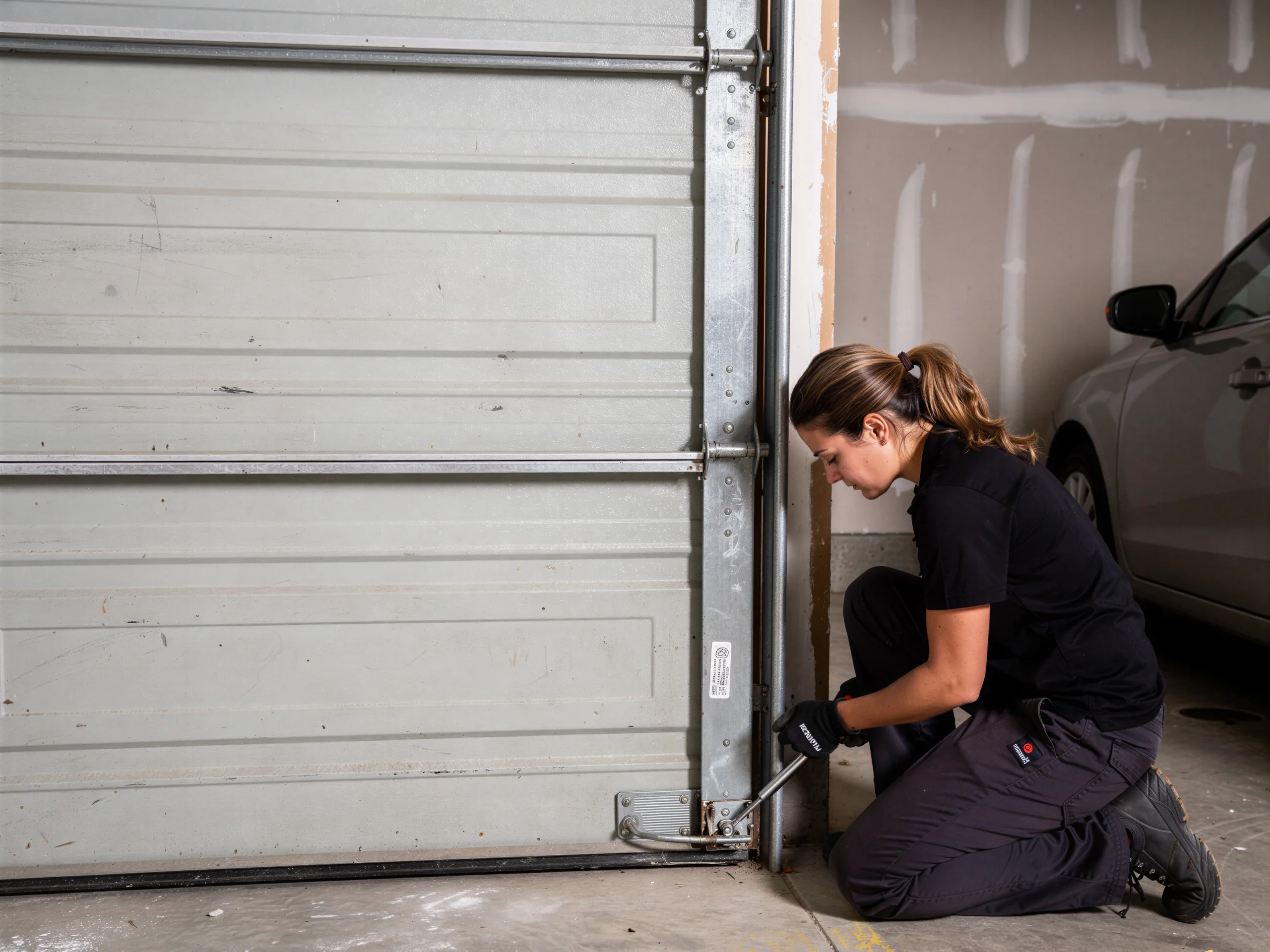
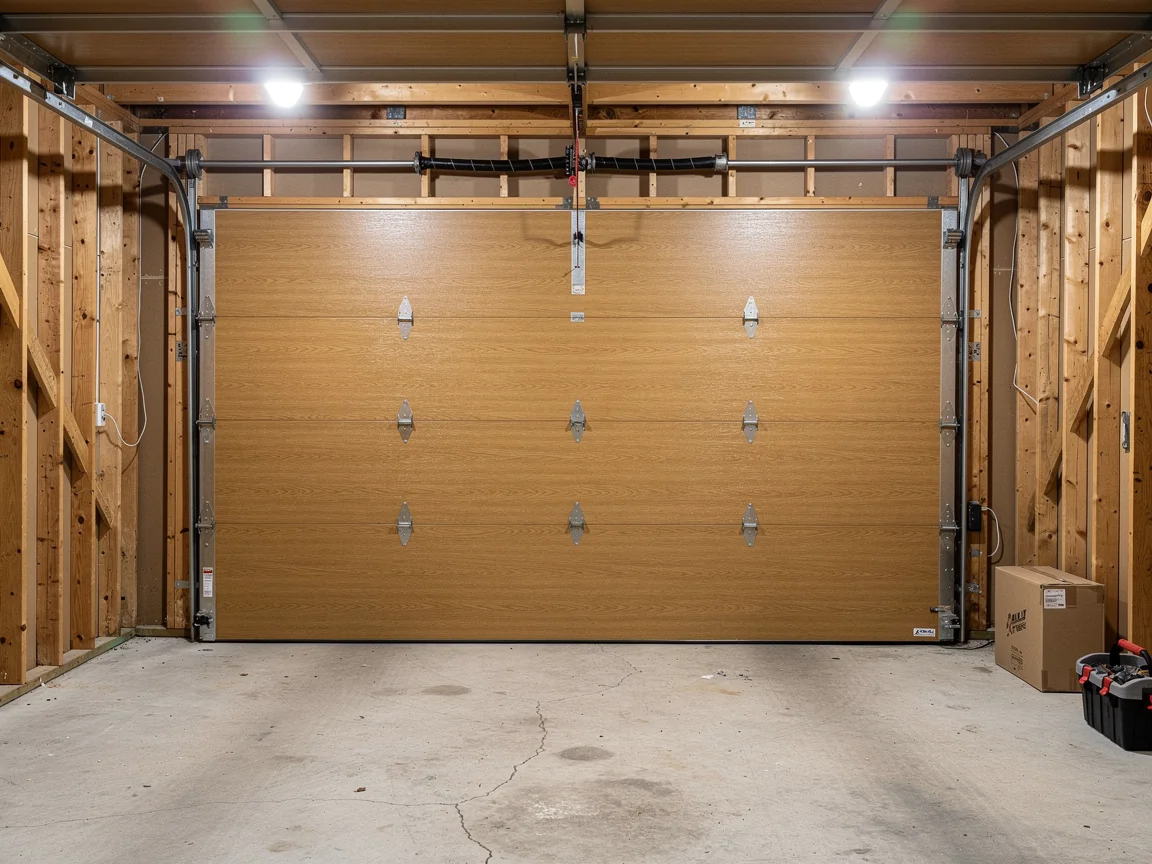
First thing on site is figuring out whether the door actually left the track or whether the track itself has pulled away from the jamb - those look similar from the driveway but they're different repairs.
Replace rather than straighten
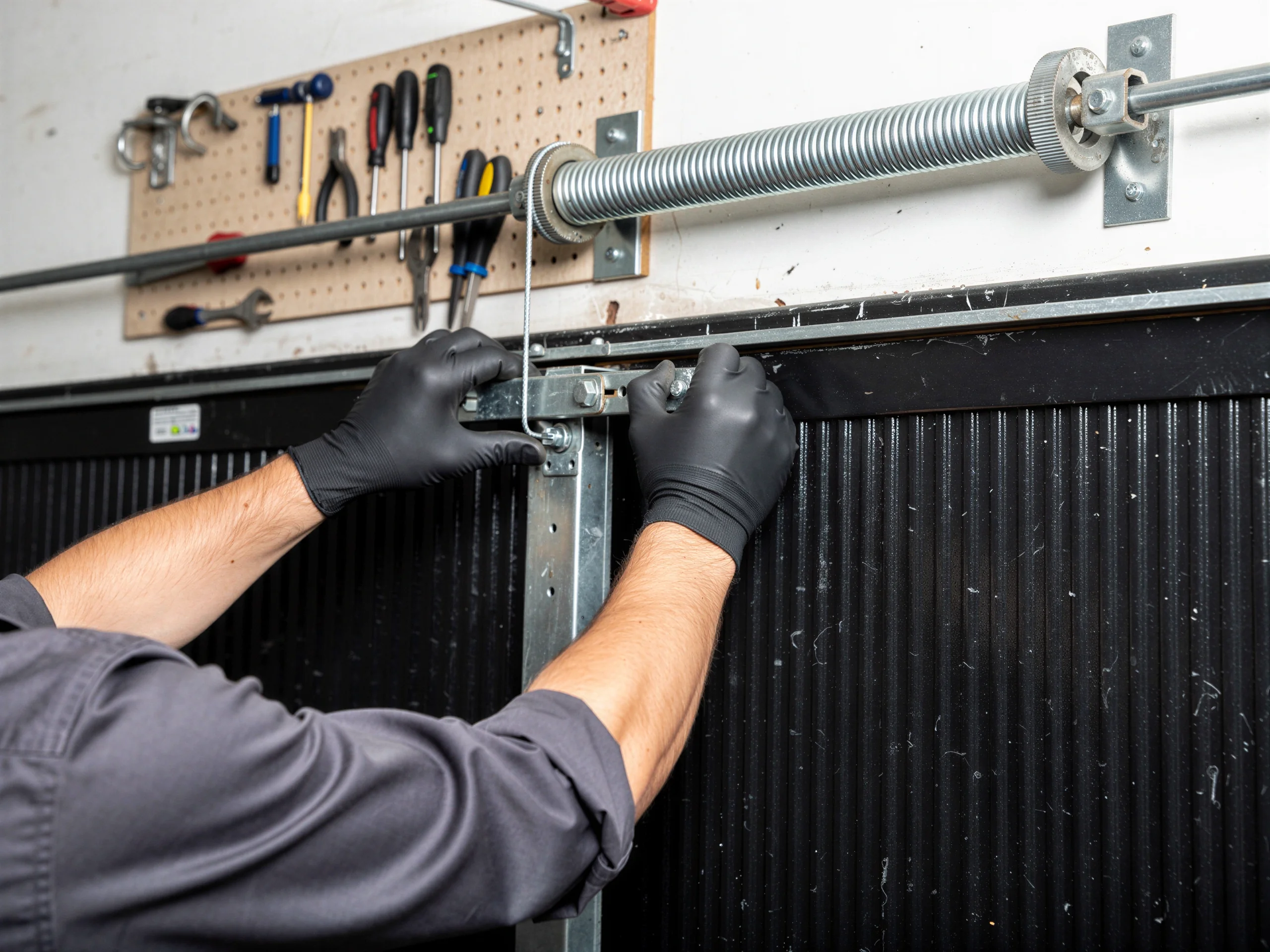
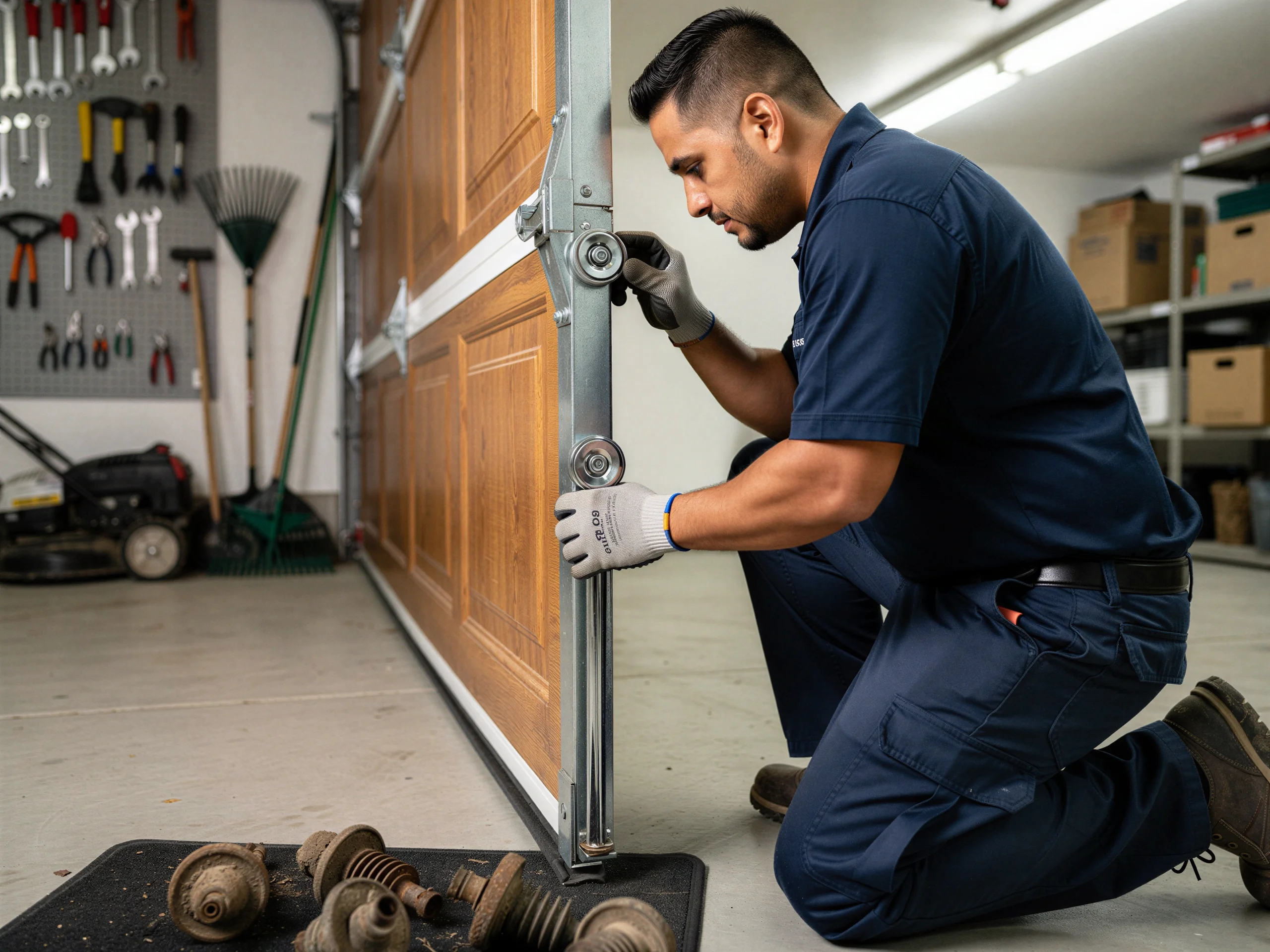
If it's a bent track, straightening rarely holds for long on a door that's moving every day; we'll tell you when replacement is the better call instead of fighting it. Most off-track jobs we run in Arizona City come down to one of three things: a broken roller that let the panel ride out of the channel, a loose or sheared bracket where the track bolts to the frame, or a cable that's come off the drum and let one side of the door hang unsupported.
Full off-track fix steps
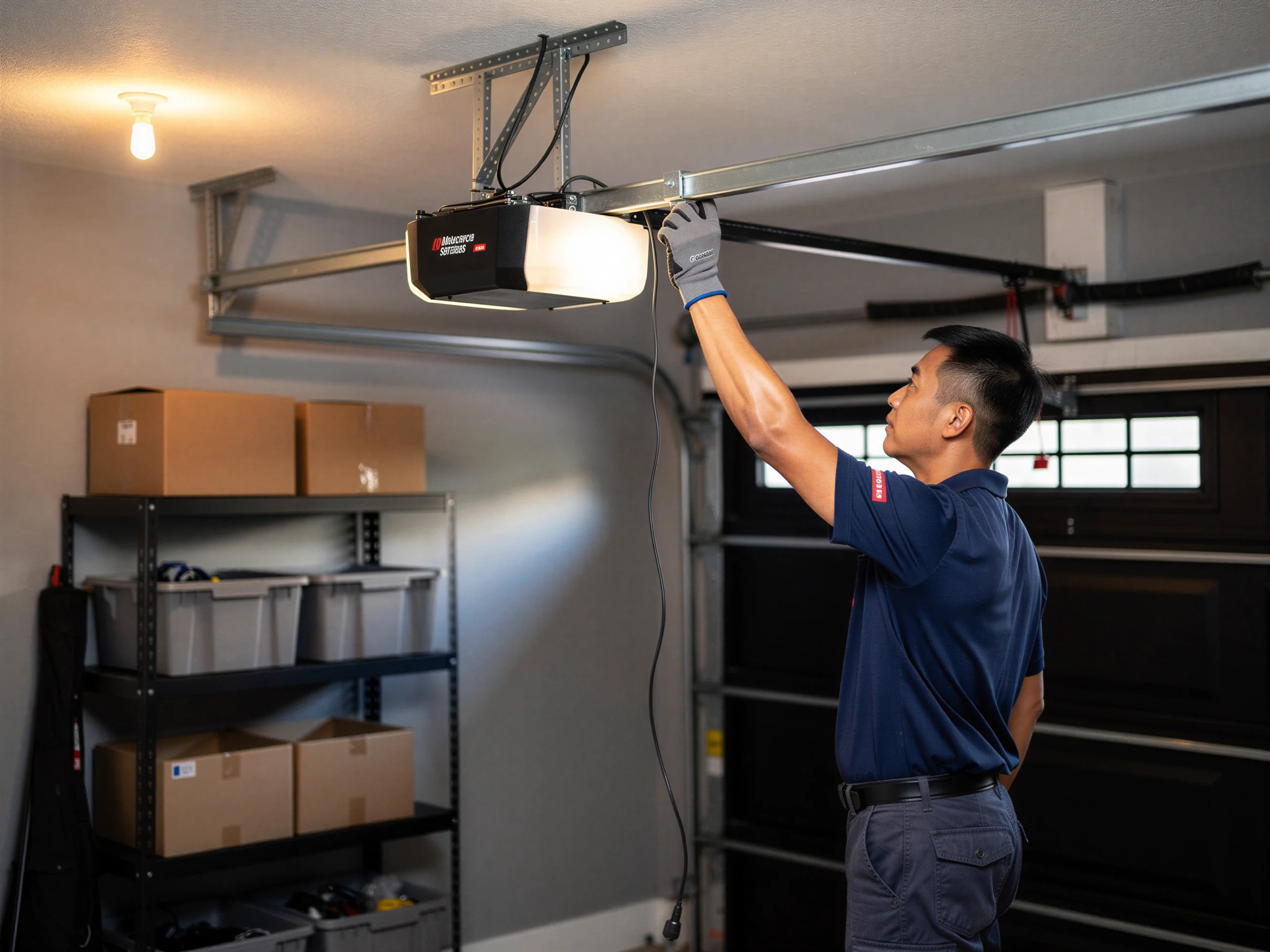
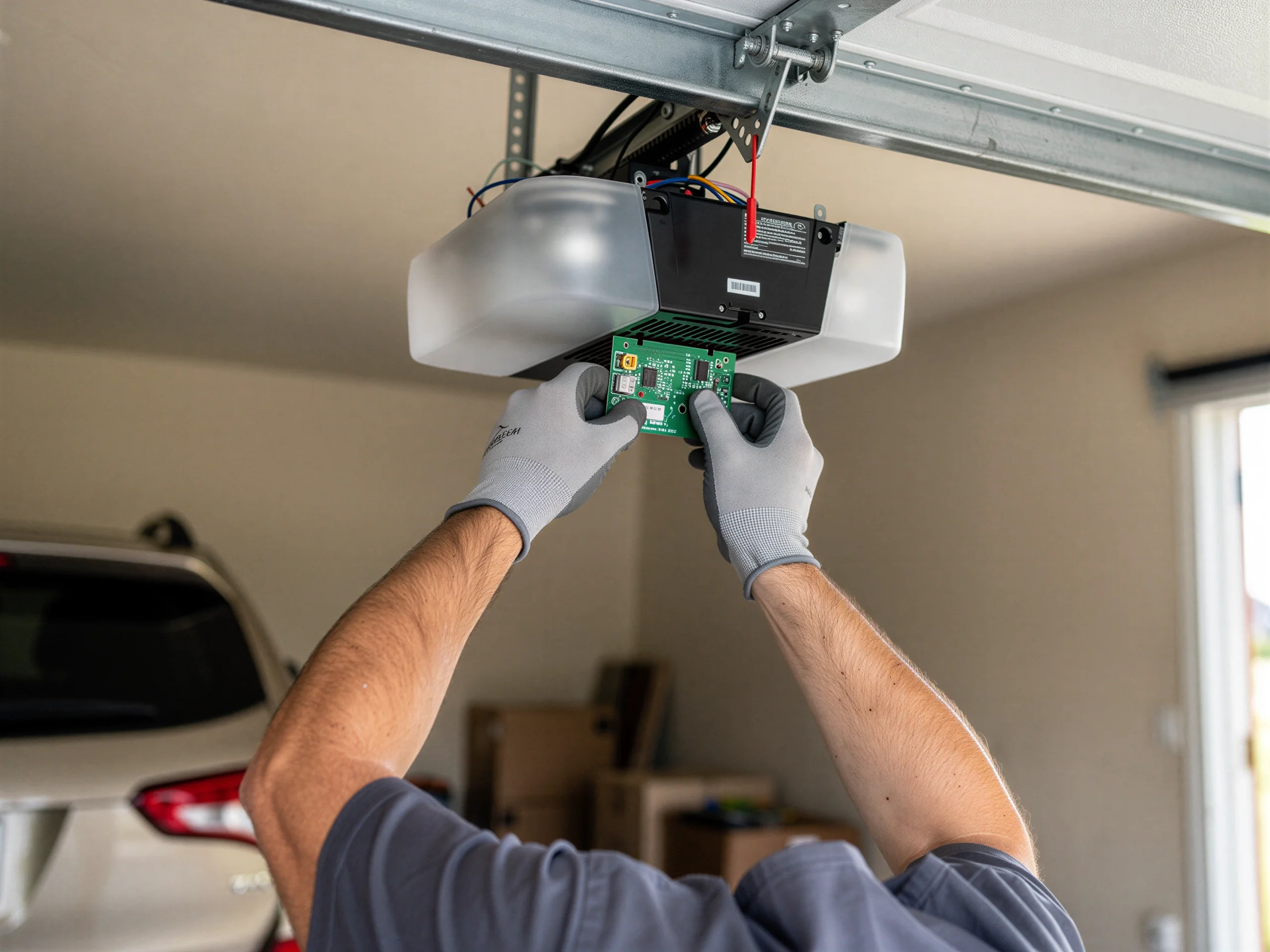
Each of those gets fixed differently - rollers get swapped, brackets get re-set and re-screwed into solid framing, cables get re-seated and the drum checked for wear. We also check the opener's travel limits and force settings before we close out the job.
Recalibrate opener after realignment
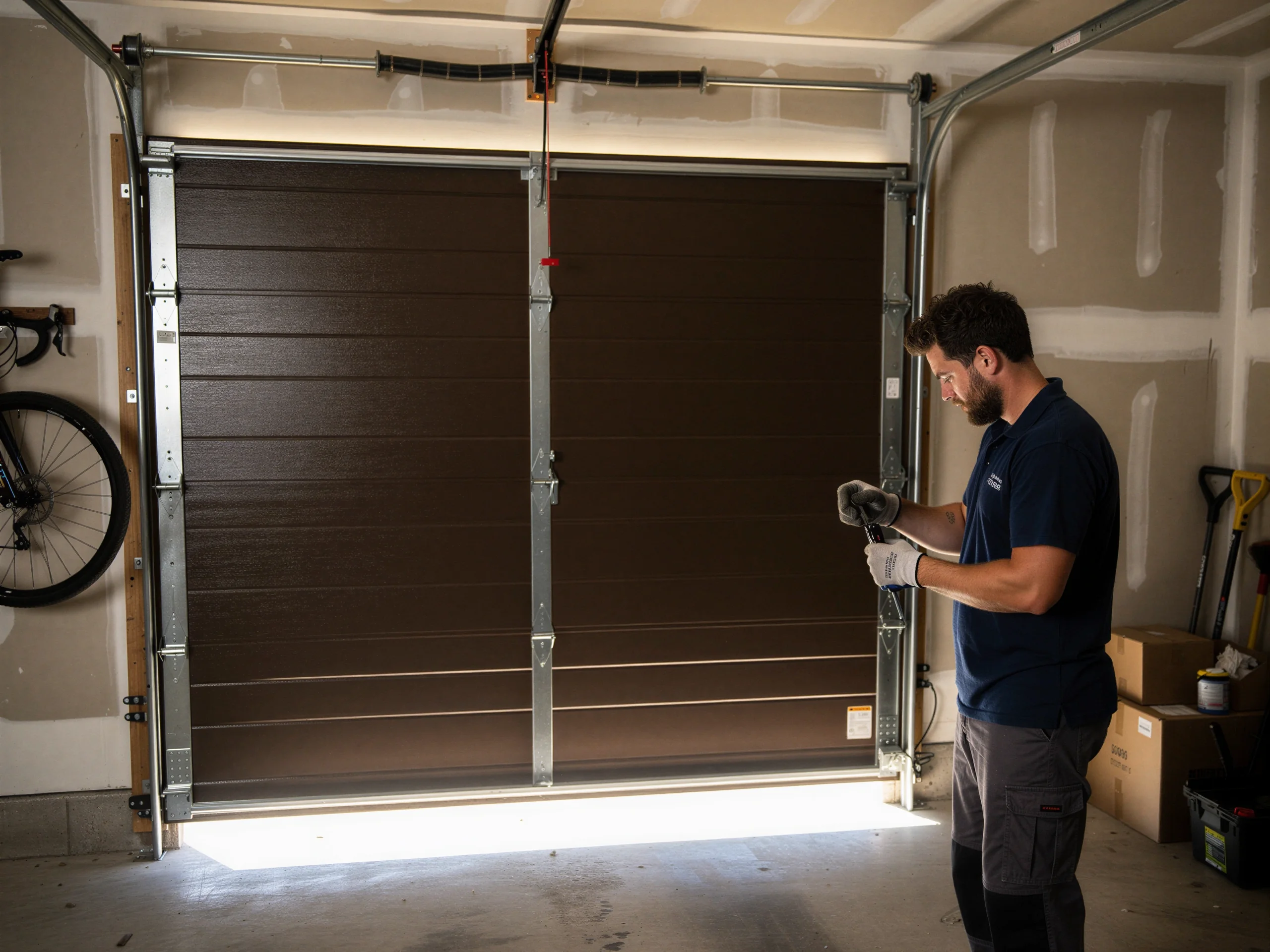
A door that's just had a track realigned can bind in a new spot if the opener's still calibrated for the old geometry, and that's an easy thing to miss if you're only looking at the track itself.
What You Pay
We don't have a posted price list for this page, and we're not going to make one up. What we can tell you is how we approach it: we look at the door, quote the repair - roller, bracket, cable, or a combination - before we talk about anything bigger like a full track swap.
Repair-first pricing
Median household income across the area runs about $54,519, and that's part of why we lead with the repair option rather than jumping straight to replacement. A bent track on an otherwise sound door is often a repair job, not a tear-out.
Rusted track, aging hardware
If the track's rusted through or the opener and the hardware are both near the end of their life, we'll say so plainly rather than patch something that's going to fail again in a month.
Frame damage limits repair
The honest limitation here: if the damage is bad enough - a door that's been forced back onto a bent track more than once, or a frame that's pulled away from the house - a repair quote might come back higher than a straight replacement would cost. We'd rather tell you that up front than nurse a door along.
Getting It Booked In
Since we're coming from Casa Grande, about 12 miles to reach Arizona City, we schedule this route the same way we schedule Stanfield, Sacaton, and Arizona City together when we can - it keeps the drive time reasonable and keeps the quote honest.
Call-ahead booking only
We don't keep a branch or a standing crew in town, so this isn't a walk-in operation; it's a call-ahead one. When you call, the more you can tell us about what the door's doing, the faster we can figure out what's riding in the truck.
Symptoms to report
Is the door stuck halfway open? Is one corner hanging lower than the other? Did you hear a bang before it stopped moving? Any of those point us toward a different repair, and knowing it before we're on site means less time standing around diagnosing and more time fixing.
Never force a stuck door
Do not try to force the door open or closed once it's off track. A door hanging on one cable or riding partway out of its channel can drop without warning, and that's not a repair you want to turn into an injury.
What Can Go Wrong
The most common mistake we find after the fact is someone's already tried to muscle the door back into the track themselves. It usually makes the bracket damage worse, bends the track further out of true, or strips the roller stem so it won't hold in the channel at all anymore.
Seized roller stems
We'd rather see the door exactly as it failed. On older sections of hardware - less common here given the newer build stock in Arizona City, but it happens - a worn roller bearing can seize and snap the stem clean off mid-cycle, which drops that corner of the door suddenly rather than gradually.
Spring failing near track issue
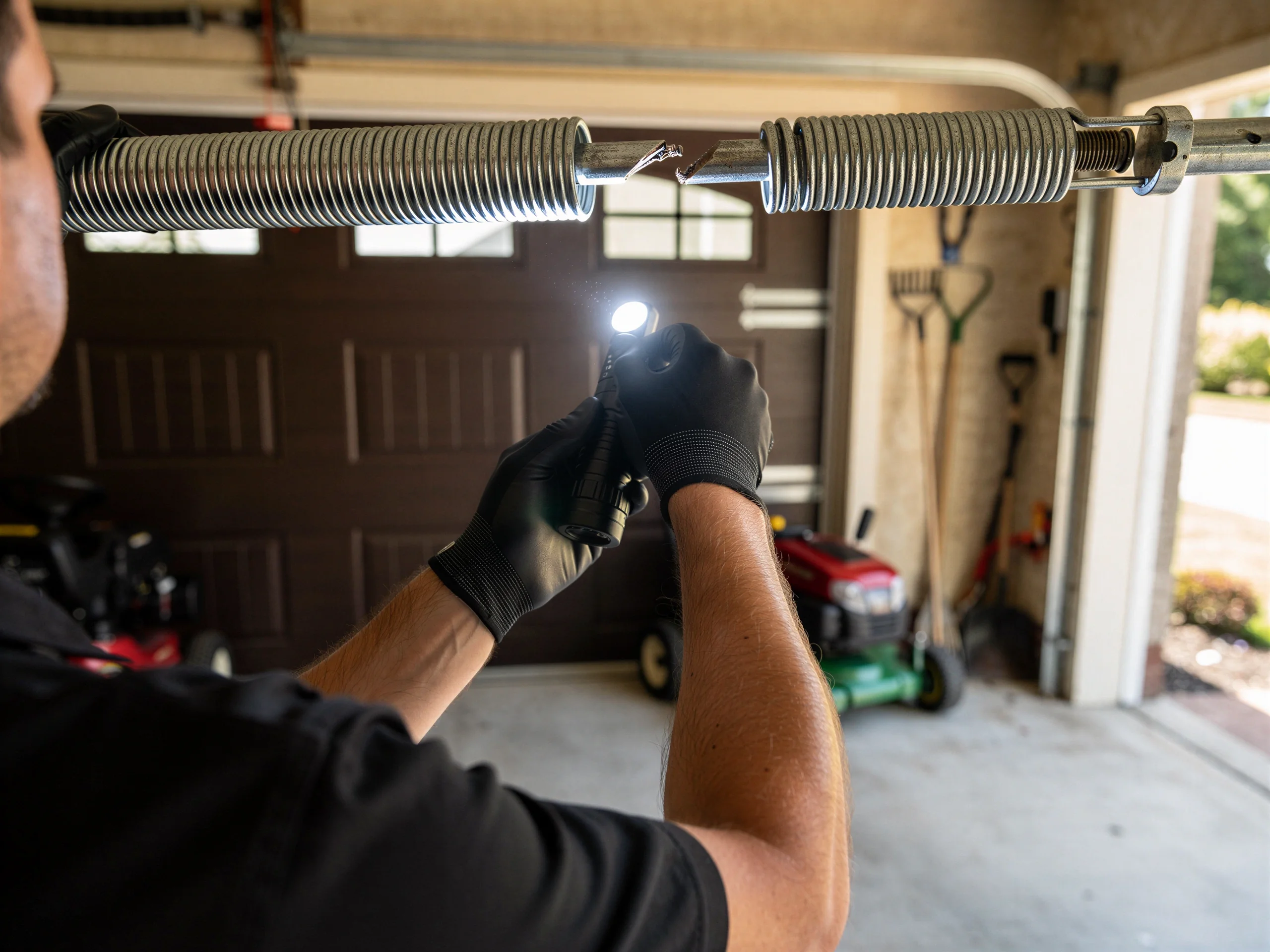
That's a different repair urgency than a track that's slowly worked loose over a season of heat cycling. The other failure we watch for is a torsion spring that's about to go right around the time the track problem shows up.
Two-part repair scenario
They're not always related, but a door that's fighting a bad spring puts extra strain on the rollers and track hardware, so what looks like a simple off-track fix can turn into a two-part repair once we're actually looking at it.
Can You Do This Yourself
If the door's only slightly off and still closes, you can sometimes get it to re-seat by loosening the track bolts slightly and nudging it back into line - but if a cable's off the drum or a roller's broken, there's spring tension and a heavy panel involved, and that's not a DIY afternoon. Torsion springs especially are not something to mess with; the stored tension in one can cause real injury if it lets go while you're working near it.
A reasonable DIY check before you call anyone: look at whether the track brackets are loose at the frame. If you can wiggle the track by hand where it bolts to the wall, that's often enough to explain a door walking off its rails, and tightening those lag screws is within reach for most people with a ladder and a socket wrench. Past that - bent track, broken roller, loose cable - it's worth having someone look at it who does this daily. We'd rather answer a question over the phone and save you a service call than have you make it worse.
Talk to a local pro
Garage door service in Casa Grande?
Same-day service with honest, upfront quotes.