What Can Go Wrong
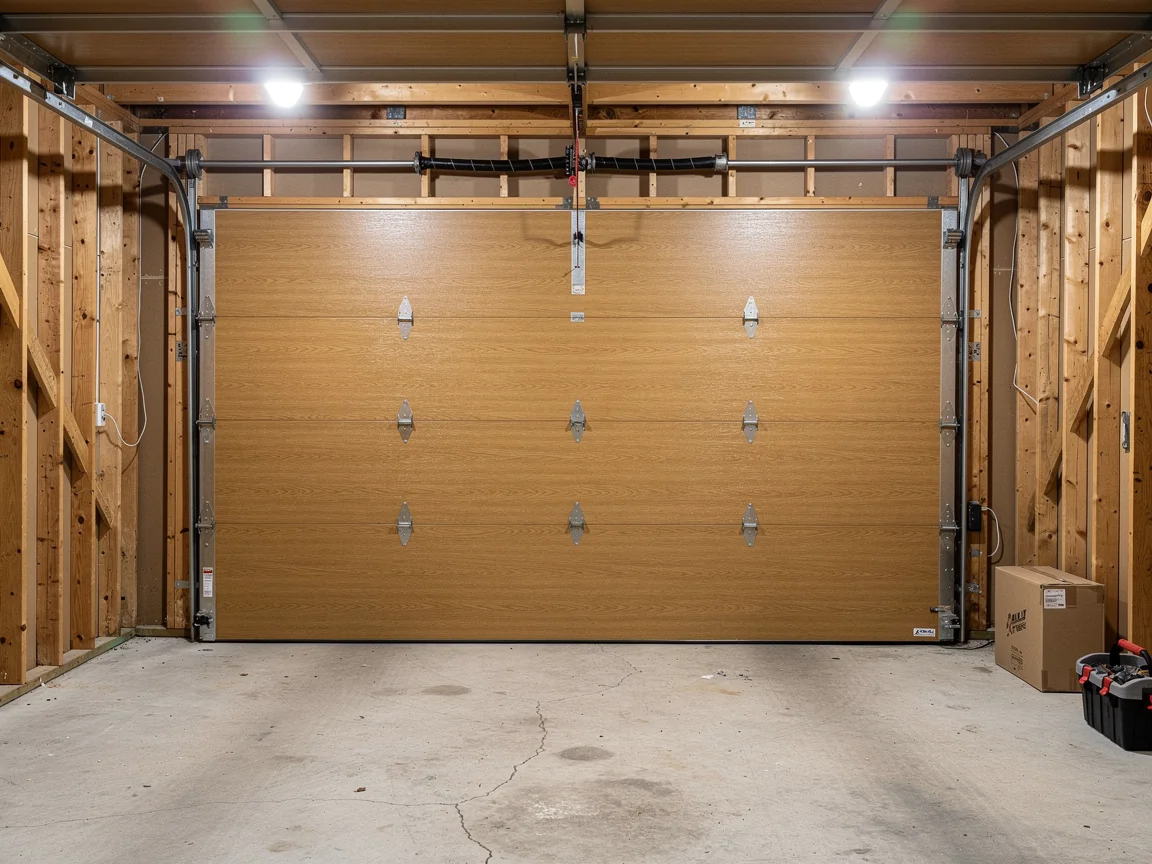
Most houses in Sacaton went up around 1993, which puts the garage doors squarely in the steel sectional era - two-car openings running 16 feet wide on standard roll-formed track, hung on extension or early torsion spring setups depending on who built the subdivision.
Thin track thermal stress
That track is galvanized steel, thin gauge, and it was never designed to handle 50 years of Arizona heat cycling. When the sun bakes one side of the door and the inside stays cooler, the metal expands unevenly and the track brackets start to walk loose from the jamb.
Bumper-bent bracket
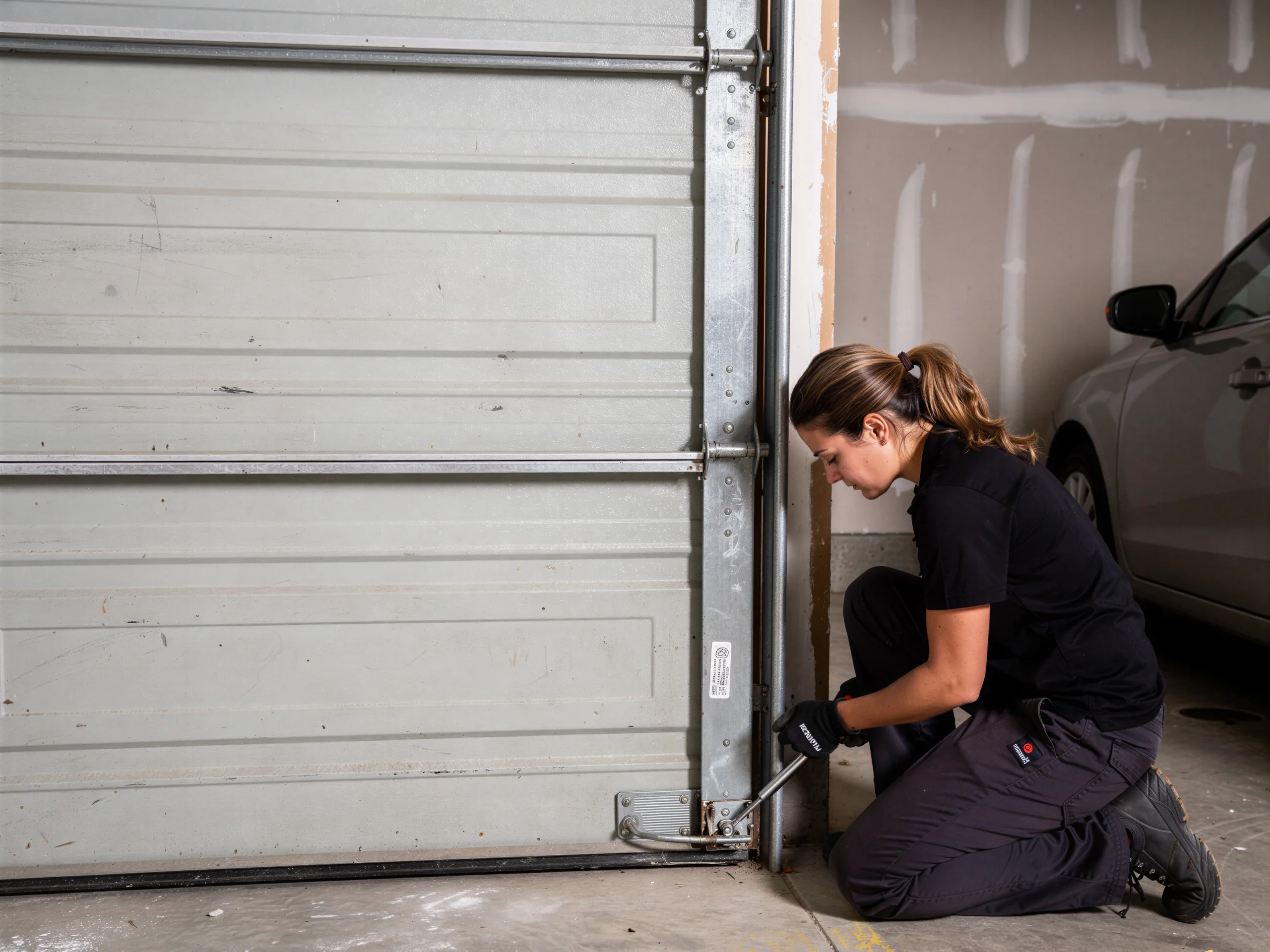
Add a bent bottom bracket from a car bumper or a roller that's worn past its bushing, and the door jumps the rail instead of riding it. On a door this size, once one roller skips the track, the whole panel can rack sideways and bind, which is the point where people call us instead of trying to force it back by hand.
Cable spooling off drum
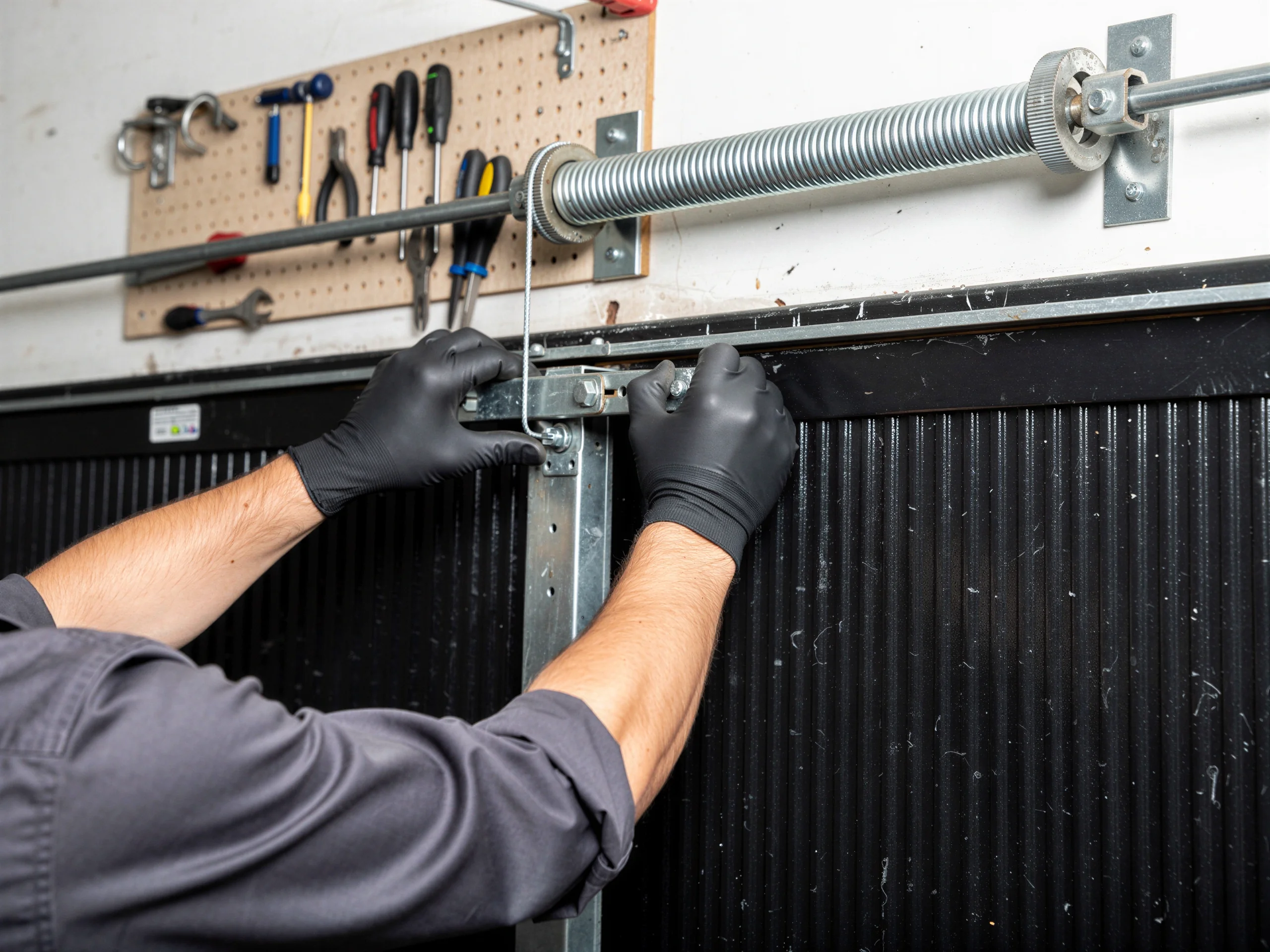
We also see cable spooling off the drum when a bracket has already shifted - a separate problem that looks the same from the driveway but needs a different fix. Both show up more in houses from this build era because the hardware is original or close to it, not because anyone installed it wrong.
What the Fix Involves
First step is figuring out whether the track itself bent or whether it's just the brackets that pulled away from the framing - those are different repairs and charging for one when you need the other is how people get burned.
Re-anchor or replace track
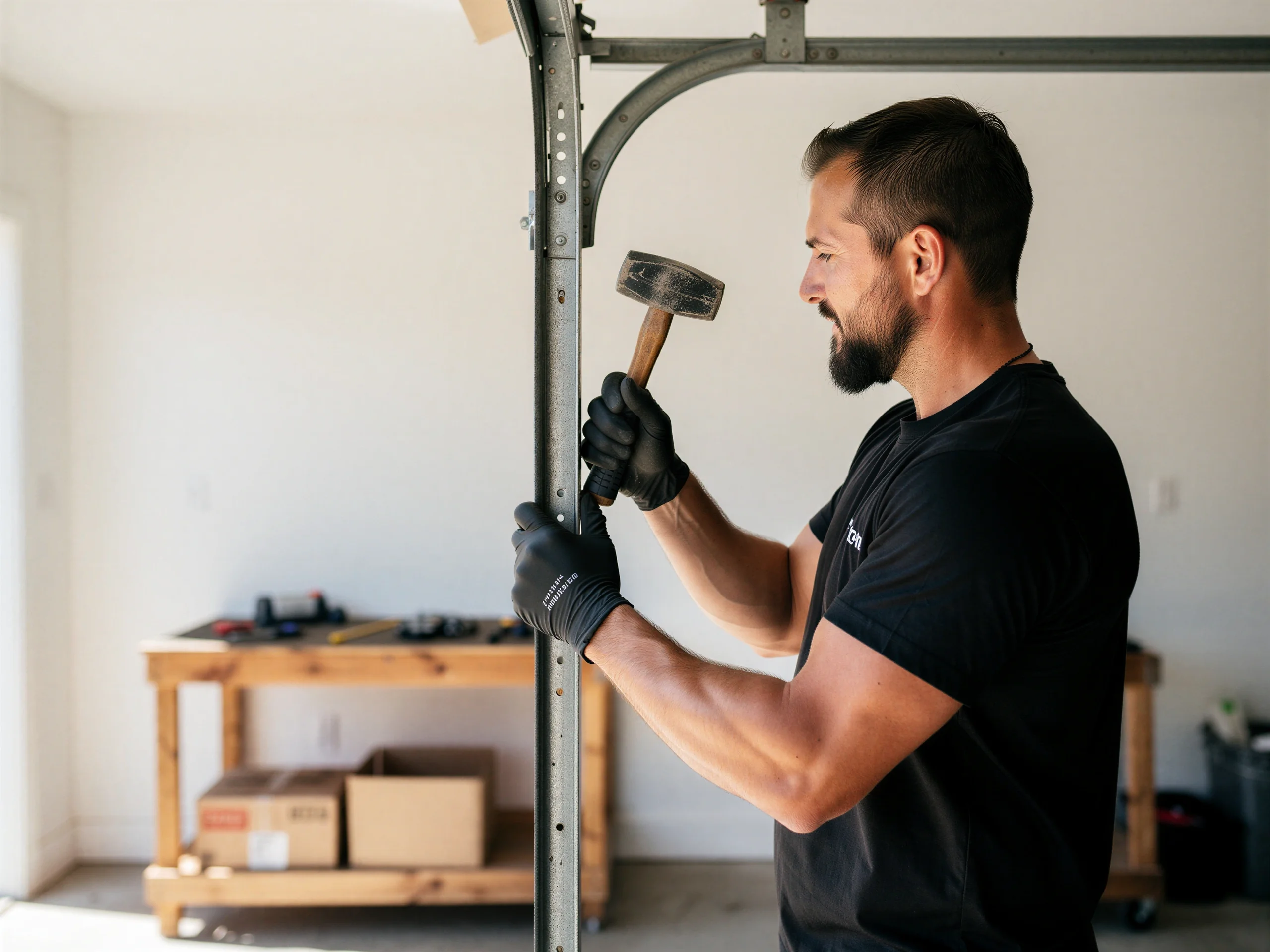
If the track is straight and the brackets loosened from thermal cycling, we re-anchor them, square the rail, and reset the rollers. If the track is actually bent or dented, we replace that section rather than hammer it back into shape, since a hammered track will walk out of alignment again within a season.
Bottom bracket and drum
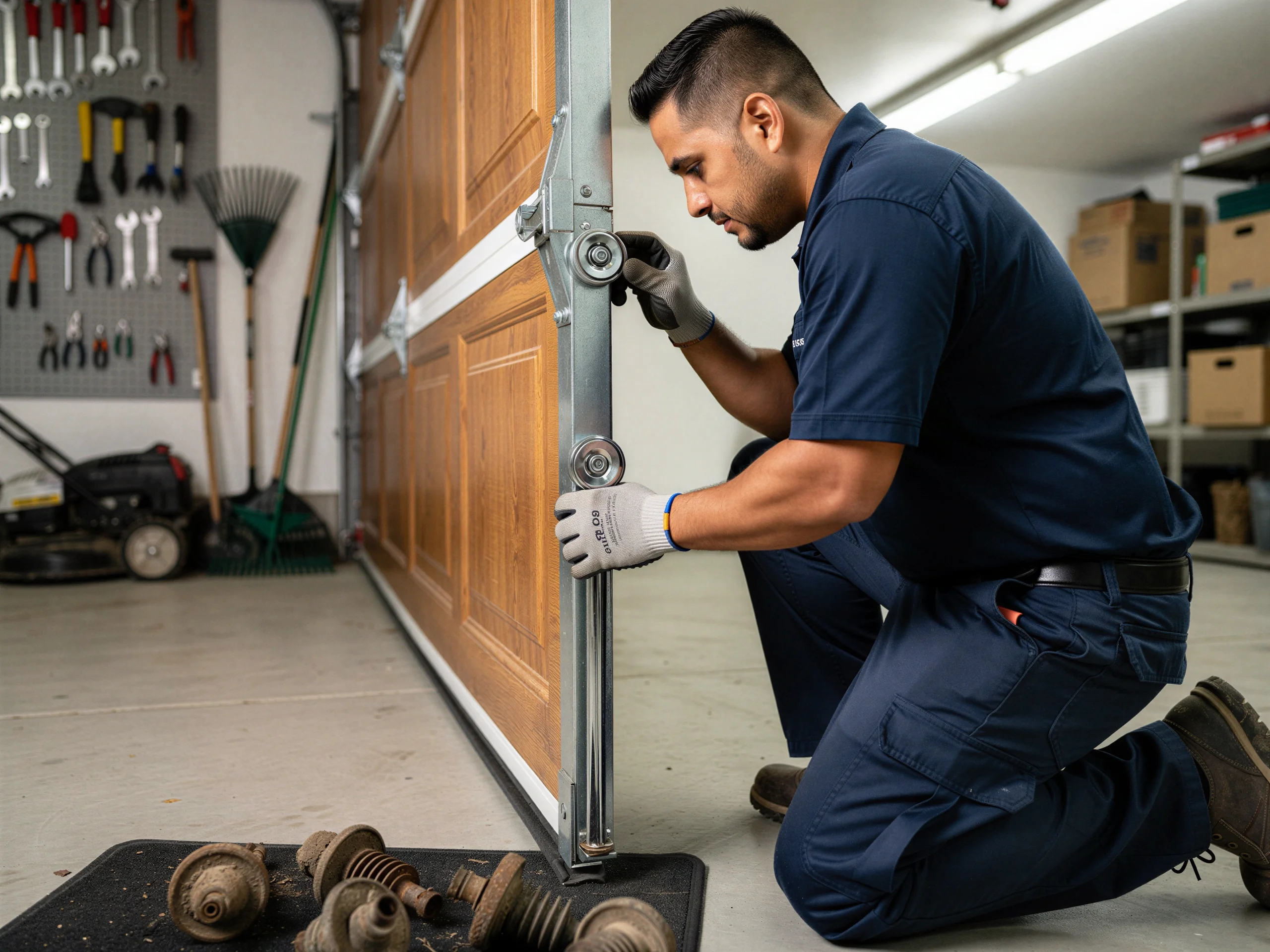
We also check the bottom bracket and the cable drum while the door is apart, because on a 1990s-era setup these parts have usually never been swapped and a worn roller bearing is often what started the whole chain.
No forcing onto bad track
We don't force a door back onto bad track just to get it moving again - that's the kind of fix that comes back worse in a month, and we'd rather tell you it needs the section replaced than hand you a door that'll jump again by July.
What Is on the Truck
For doors from this build era we carry standard-width galvanized track sections, replacement rollers in the common bearing sizes, and bottom brackets sized for the 16-foot two-car openings typical of Sacaton's lots. Nylon rollers go on when the original setup allowed for steel ones, since they run quieter and hold up better under repeat heat expansion than the steel rollers that shipped with a lot of 1990s doors.
One limit worth saying up front: if a door needs a full custom track bend for a non-standard ceiling height or an odd header clearance, that's not something we stock pre-cut, and it may mean a short order wait before the job finishes. We'll tell you at the inspection if that's the case rather than let you assume it's a same-visit fix.
Getting It Booked In
We run this job out of Casa Grande, about 12 miles from Sacaton, so there's no local branch to swing by - a truck comes to you. Sacaton is a smaller area, a few hundred households total, so an off-track call here isn't the volume stop-and-go of a bigger subdivision job; it's usually a single door, diagnosed and fixed in one visit once we're on-site. Tell us the door's size and roughly how old the house is when you call, and we'll bring track stock sized for it instead of guessing on the drive out.
Talk to a local pro
Garage door service in Casa Grande?
Same-day service with honest, upfront quotes.