Getting It Booked In
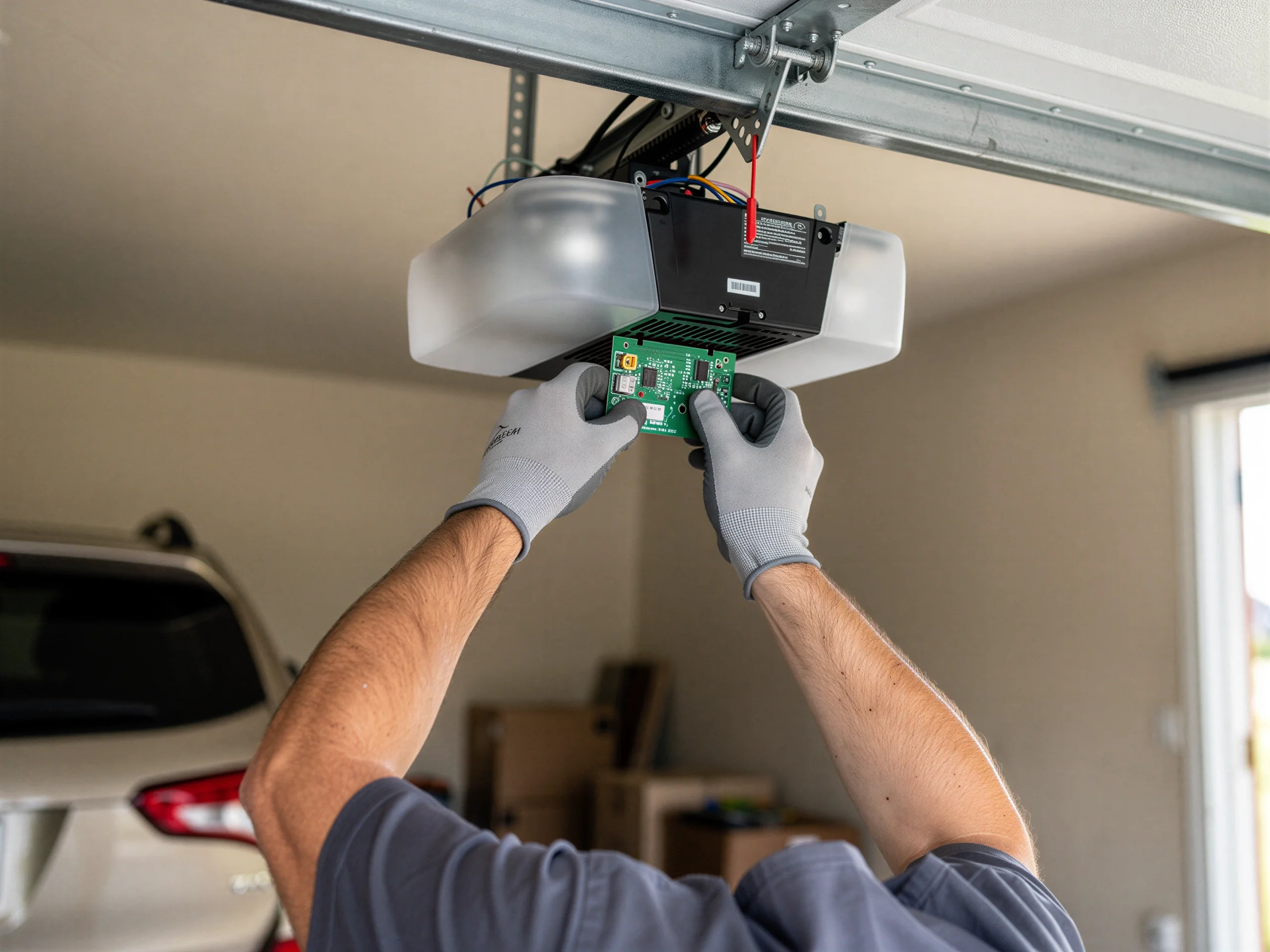
When you call about an opener that won't respond, or one that runs the motor but the door doesn't move, we ask a few questions before the truck ever leaves Casa Grande: the brand if you know it, whether the wall button works when the remote doesn't, and whether the light on the unit blinks a code.
Fault number flashes
That last one matters more than people expect, because most openers from the last twenty years flash a number that tells us the fault before we're on site. We're coming from Casa Grande, about fourteen miles out, so we'd rather bring the right part on the first trip than the second.
Bring warranty paperwork
If your opener is still under a manufacturer board warranty, bring that paperwork out when we arrive - it can change whether we repair the board or just swap the unit. We don't keep a branch in Coolidge, so there's no walk-in counter here.
One call scheduling
Everything runs through the one call, scheduled from Casa Grande, same as every job in this part of the service area. That's not a knock against the town - it's just how a small outfit covers ground without padding the bill with a second location nobody needs.
Why This Fails Locally
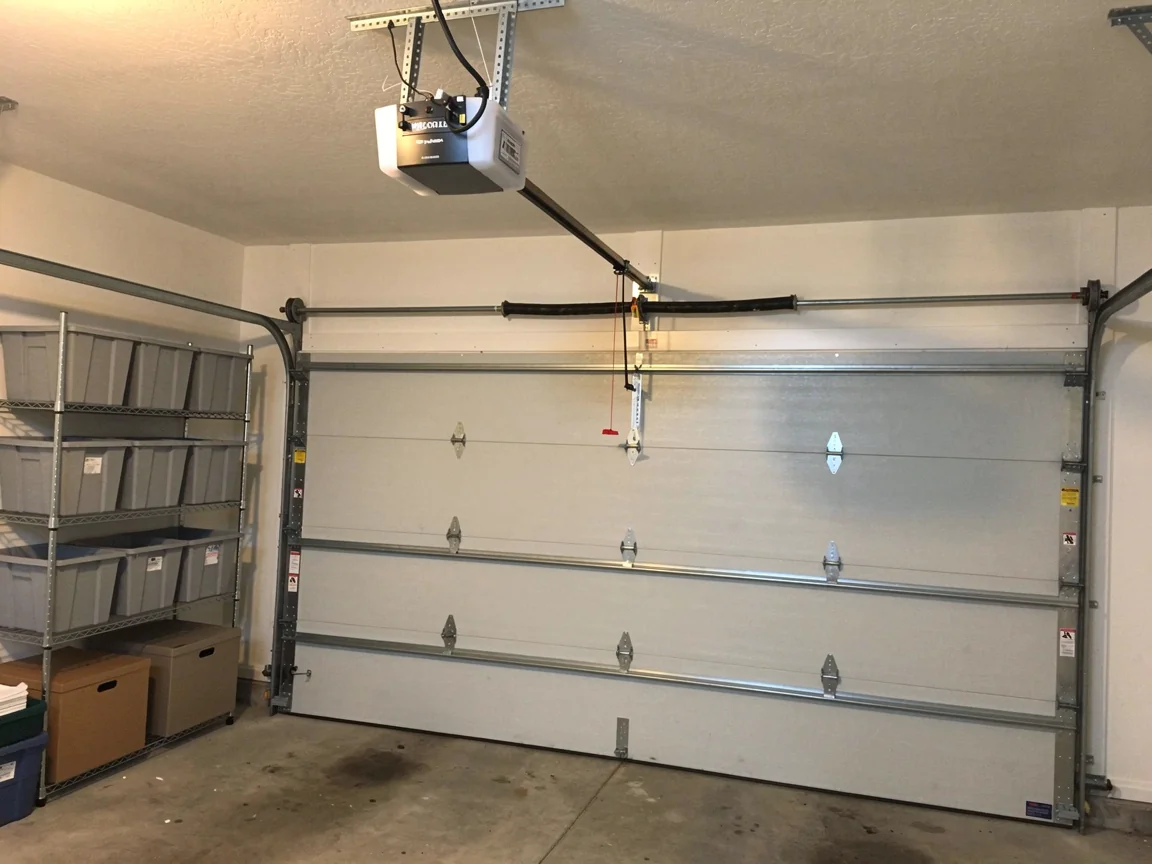
Coolidge's housing stock runs younger than people assume - the median build year here lands around 1999, inside the broader 1960-2001 range across the five areas we cover, but on the newer edge of it. That matters for openers specifically: a house built in 1999 likely got its garage door opener installed the same year, which puts a lot of original units at roughly a quarter-century old. Chain and belt drives from that era don't carry the same sensor life as current models, and most never had their photo-eye brackets touched since the day they went in.
The bigger factor is heat. Coolidge sits in a severe-heat climate band, and that's hard on an opener in ways that aren't obvious from the driveway. The circuit board sits inches from a hot garage ceiling for months at a time, and the capacitors and relay contacts on it degrade faster than the motor does. We see openers here fail at the board or the sensor long before the gearing wears out - which is good news, actually, because those parts are cheaper to replace than a motor rebuild.
What the Fix Involves
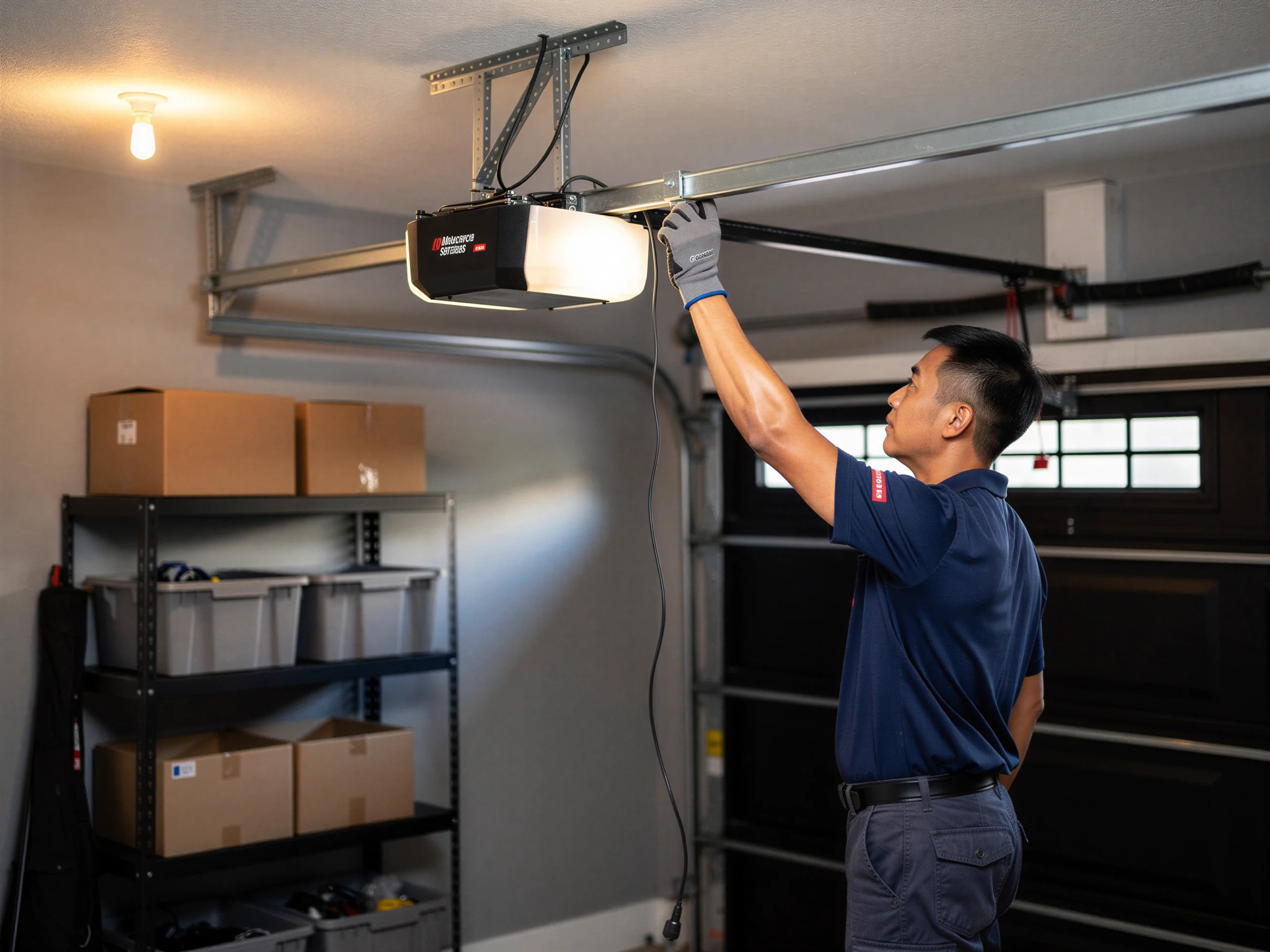
First we isolate whether the fault is the opener head, the wall control, or the safety sensors - those three get blamed on each other constantly.
Check limits before board
If the motor runs but the door won't travel the full distance, we check the travel limits and the drive gear before touching the board. If the unit doesn't respond to the remote or the wall button, we test incoming power first; a tripped breaker or a loose wire nut at the outlet gets mistaken for a dead opener more than you'd think.
Board swap or full unit
Once we've confirmed the actual fault, most jobs break down one of two ways: a sensor or board swap on an opener that's otherwise sound, or a full unit replacement when the motor or gearing is also worn.
Motor nearing end of run
We'll tell you straight which one you're looking at - on a unit built when the house was, replacing the whole opener is often the better money than chasing parts for a motor nearing the end of its run. We don't stretch a repair past the point it makes sense.
What Can Go Wrong
The most common surprise is a safety sensor that's not actually broken, just misaligned or coated in dust - the fix is five minutes, not a part.
Remote reprogramming mistaken for dead
The second most common is a remote that's lost its program while the opener itself is fine, which looks identical to a dead unit from the driveway. Both of those get ruled out before anything gets replaced.
Intermittent board dropouts
Where it gets harder is when the logic board has failed intermittently - working fine during the call, then dropping out again after we leave. Heat-related board failures do this.
Heat-only faults hard to catch
We can test under load and catch most of them, but a board that only fails at 110-plus degrees midafternoon sometimes won't show the fault during a cooler-hour service call. If that happens, we'll say so rather than guess, and we'll plan a follow-up instead of charging you twice for the same unresolved problem.
What Is on the Truck
We stock the opener parts that fail most on houses this age in this climate: photo-eye sensor pairs, logic boards for the common belt and chain-drive brands, wall control stations, and a few full opener units for same-visit replacement when a rebuild isn't worth it. What we don't carry is every obsolete board for every discontinued model - some of the openers original to 1990s-built homes are long out of production, and if yours is one of those, a full replacement is usually faster and about the same cost as hunting down a legacy part.
Coolidge's household income runs a bit above the wider service area's - $57,161 against $54,519 across the territory - which doesn't change what we charge, but it does mean replacement is often the more practical call here rather than a drawn-out repair chase on an opener that's already near the end of its working life.
Talk to a local pro
Garage door service in Casa Grande?
Same-day service with honest, upfront quotes.